
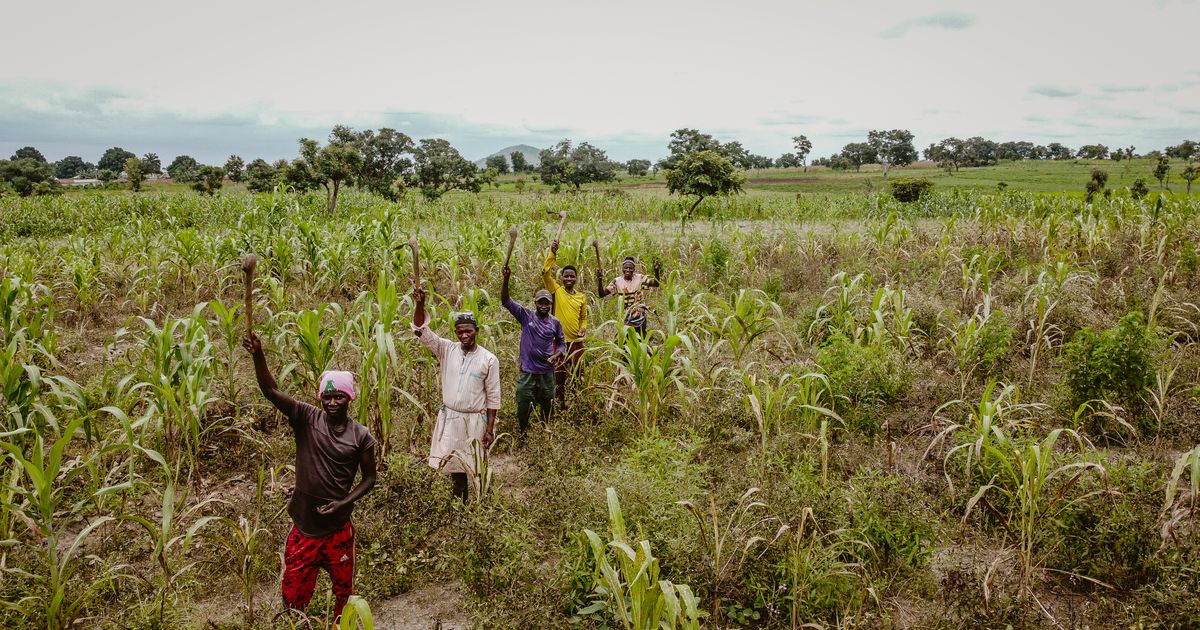
The Double Bottom Line
What if you could support smallholder farmers in Mozambique while also removing CO2 from the atmosphere? Maputo Bridge Capital (MBC), founded by Anselmo Boaventura in Fort Worth, Texas, connects sponsors with verified smallholder farmers to enable sustainable agroforestry and crop production. By focusing on the integration of trees with traditional crops, sponsors can support a model that produces both food and environmental benefits.
Traditional approaches often force a choice between supporting agricultural livelihoods or funding environmental projects. MBC eliminates this trade-off by facilitating a model where capital supports both the farmer’s immediate agricultural needs—through seed and fertilizer shop access—and long-term agroforestry goals. This creates a double bottom line: the farmer gains essential resources to increase their harvest, and the planet benefits from the CO2 sequestered by trees.
How Carbon Credits Interact with Agricultural Productivity
The Integrated Revenue Model
When a sponsor supports a Mozambican farmer through MBC, the capital enables agricultural production in partnership with the COJAZ cooperative in Zambezia. If that farmer adopts agroforestry, planting trees alongside crops, the land generates two distinct potential streams of value over time.
| Revenue Stream | Per Hectare/Year | Source |
|---|---|---|
| Crop revenue | $300-$2,000 | Maize, cassava, cashew, sesame (harvest sale) |
| Carbon-related impact | $60-$180 | Trees sequester CO2, verified by satellite |
| Total revenue | $360-$2,180 | Double bottom line potential |
Example: 1,000 Farmer Agroforestry Support
Support target: $500,000 ($500/farmer for seeds, training, tree seedlings, satellite monitoring) Farmers: 1,000 Hectares: 1,000 (1 hectare each) Crop: Maize + intercropped trees (agroforestry model)
| Revenue Stream | Annual Amount | Notes |
|---|---|---|
| Crop revenue (maize) | $375,000 | 1,500 kg/ha × $250/ton × 1,000 ha |
| Carbon-related impact | $120,000 | 10 tons CO2/ha × $12/ton × 1,000 ha |
| Total annual revenue | $495,000 | |
| Farmer share | $346,500 | Via local shop access |
| MBC operating cost | $44,550 | Field verification and documentation |
| Verification reserve | $74,250 | Satellite + audit |
| Transaction/FX costs | $29,700 | Operational expenses |
Total Impact Potential:
- Food security: Harvest-aligned support for agricultural inputs
- Carbon impact: 10,000 tons CO2/year sequestered and verified via satellite
As MBC transitions its model, we continue to look toward how sponsoring a farmer works and examine the data behind our approach through resources like MBC Farmer Wealth Simulation: Computational Proof of 3.2x Impact. Understanding the intersection of smallholder success and environmental health remains a core area of our blog.
5 Carbon-Positive Models for Smallholder Agriculture
Model 1: Agroforestry Support ($50K-$500K)
What: Connecting sponsors with smallholder farmers in Mozambique to plant trees alongside food crops. Maputo Bridge Capital (MBC), founded by Anselmo Boaventura, works with the COJAZ cooperative in Zambezia to facilitate these verified agricultural improvements.
| Metric | Value |
|---|---|
| Sponsorship | $500/hectare |
| Crops | Maize, cassava, beans (food security) |
| Trees | Cashew, mango, avocado (long-term income) |
| Carbon | 8-15 tons CO2/ha/year |
| Carbon revenue | $96-$180/ha/year at $12/ton |
| Crop revenue | $375-$2,000/ha/year |
| CO2 impact | 8,000-15,000 tons per 1,000 ha |
| Timeline | Year 1 (planting) → Year 3 (first credits) |
Model 2: Beekeeping + Forest Conservation ($100K-$1M)
What: Supporting beekeepers through the COJAZ cooperative to maintain hives in miombo forests, which provides income and prevents deforestation.
| Metric | Value |
|---|---|
| Sponsorship | $50-$150/hive |
| Hives | 5,000-10,000 |
| Forest protected | 10,000-20,000 hectares |
| Carbon | 3-8 tons CO2/ha/year (avoided deforestation) |
| Honey revenue | $80-$240/hive/year |
| Carbon revenue | $36-$96/hectare/year |
| CO2 impact | 30,000-160,000 tons/year |
| Timeline | Year 1 (hives placed) → Year 2 (first credits) |
Model 3: Mangrove Restoration ($500K-$5M)
What: Restoring degraded coastal mangroves. Sponsors provide the resources necessary for COJAZ farmers to engage in vital environmental stewardship.
| Metric | Value |
|---|---|
| Sponsorship | $500-$1,000/hectare |
| Hectares | 1,000-10,000 |
| Carbon | 10-25 tons CO2/ha/year (blue carbon) |
| Blue carbon price | $20-$30/ton (premium) |
| Carbon revenue | $200-$750/hectare/year |
| CO2 impact | 10,000-250,000 tons/year |
| Timeline | Year 1 (restoration) → Year 3 (first credits) |
Model 4: Conservation Agriculture ($200K-$2M)
What: Supporting farmers to adopt no-till, cover cropping, and organic practices that build soil carbon, ensuring long-term sustainability.
| Metric | Value |
|---|---|
| Sponsorship | $200-$300/hectare |
| Hectares | 1,000-10,000 |
| Carbon | 2-5 tons CO2/ha/year (soil carbon) |
| Carbon revenue | $24-$60/hectare/year |
| Yield increase | 15-30% (healthier soil) |
| Crop revenue | $400-$2,600/hectare/year (up from $300-$2,000) |
| CO2 impact | 2,000-50,000 tons/year |
| Timeline | Year 1 (adoption) → Year 2 (first credits) |
Model 5: PICS Bags + Carbon ($100K-$1M)
What: Providing hermetic storage bags to reduce post-harvest loss. MBC ensures 92% of sponsorship funds go directly to the farmer's local seed and fertilizer shop.
| Metric | Value |
|---|---|
| Sponsorship | $80/farmer (10 bags) |
| Farmers | 5,000-10,000 |
| Grain saved | 600 kg/farmer (30% loss prevented) |
| Avoided emissions | 0.5 kg CO2/kg grain (production + transport emissions avoided) |
| Carbon revenue | $15/farmer/year (3 tons CO2 × $5/ton avoided emissions) |
| Grain revenue | $210/farmer/year (600 kg × $0.35/kg saved) |
| CO2 impact | 15,000-30,000 tons/year |
| Timeline | Immediate (first harvest) |
The Nature of Mozambican Agricultural Land
Land rights (DUAT), community mapping, soil, water, erosion and regeneration. Read the DUAT chapter and five soil tests free.
PDF ebook, instant download. $5 of every copy buys seed for a farmer.
The Verification Stack: 4 Layers of Trust
MBC verifies every project through 4 independent layers. These systems represent research directions into how technology could be applied for Mozambican agriculture in the future:
Layer 1: Satellite NDVI (Sentinel-2)
- Every 5 days, 10m resolution.
- Measures vegetation density as a carbon storage proxy.
- Covers 100% of registered plots simultaneously.
- Detects: tree growth, deforestation, crop health.
Layer 2: Weather Data (Open-Meteo API)
- Daily rainfall, temperature, humidity tracking.
- Predicts carbon sequestration rates based on climate variables.
- Helps understand climate risks to agriculture.
- Detects: climate impact on projects.
Layer 3: Field Agent Verification
- MBC staff and COJAZ agents visit plots for validation.
- Photo documentation, GPS verification, and farmer interviews are collected.
- 8% of funds cover field verification and receipt documentation.
- Detects: ground-level reality.
Layer 4: Blockchain Traceability
- Every receipt and transaction can be hash-linked to a GPS coordinate.
- Records: farmer → field verification → MBC platform.
- Provides a permanent, transparent record of support.
- Detects: duplicate entries.
The M-Pesa Carbon Pipeline
How Carbon Money Flows
| Stage | Description |
|---|---|
| Carbon Credit Buyer | Corporation or DFI seeking verified impact |
| MBC Platform | Facilitates connections with a transparent 8% cost structure |
| Verification Reserve | Covers satellite monitoring, audits, and field agents |
| M-Pesa | Local mobile money transaction infrastructure |
| FX Conversion | USD to MZN currency exchange |
| Farmer's M-Pesa Account | Direct delivery to the farmer's mobile device |
Total time from resource allocation to farmer's phone: minutes via M-Pesa.
Traditional platforms can take months due to manual verification, bank transfers, and intermediary fees. MBC aims for efficiency to support smallholder farmers in Zambezia, working through the COJAZ cooperative.
GIIN IRIS+ Impact Metrics
MBC projects align with global impact tracking standards such as GIIN IRIS+ metrics:
| IRIS+ Metric | What It Measures |
|---|---|
| PI4060 | GHG emissions mitigated |
| PI8734 | Land conserved |
| PI1561 | People in sustainable agriculture |
| OI4750 | Total people impacted |
| OI4751 | Jobs created |
| PD4150 | Land restored |
| PI8407 | Client income increase |
| OI4234 | GHG emissions mitigated |
Every sponsorship generates measurable ESG impact. This is the double bottom line in practice, using data to verify the support provided to farmers.
Comparison: MBC vs Other Models
| Feature | MBC (Direct Support) | Traditional Platforms |
|---|---|---|
| Farmer income | Crop production support | Carbon-focused only |
| Verification | Satellite + Field receipts | Ground inspection |
| Payout speed | Rapid (via M-Pesa) | 3-6 months |
| Transparency | 92% to farmer shops | High intermediary margins |
| CO2 impact | Positive | Positive |
| ESG compliance | Full (IRIS+) | Partial |
MBC is the platform that connects sponsors with verified smallholder farmers, creating clear, documented impact.
Supporting Sustainable Agriculture
For Sponsors
- Connect: Reach out to learn about current project needs.
- Support: Provide funds for smallholder farmers in Mozambique.
- Verified: Receive receipts and field photos from local seed and fertilizer shops.
- Cycle: After harvest, farmers repay into a Community Fund to help the next farmer.
For Corporate Partners
- Partner with MBC projects verified through established metrics.
- Utilize GPS-linked reporting.
- Support community-based agricultural development.
- Access GIIN IRIS+ aligned reporting.
If you are interested in supporting agricultural development, you can sponsor a farmer from $25 at https://maputobridgecapital.com/sponsor-a-farmer-mozambique. Please note that sponsorships are gifts, not investments.
Conclusion
The choice between supporting smallholder agriculture and environmental impact is a false one. MBC's model, founded by Anselmo Boaventura in Fort Worth, Texas, demonstrates that creating tangible agricultural outcomes and environmental stewardship can occur simultaneously. By working with the COJAZ cooperative in Zambezia, we connect sponsors directly to farmers to facilitate real-world agricultural progress.
Every dollar deployed through MBC is allocated as follows:
- $0.92 to the farmer: This funding goes directly to local seed and fertilizer shops to improve crop potential.
- $0.08 to MBC: This covers essential field verification and receipt documentation.
And in return:
- $150-$250/hectare/year: Potential increase in farmer income through improved yields.
- 5-15 tons CO2/ha/year: Potential environmental sequestration metrics.
- Verification: Sponsors receive field photos and receipts for their contributions.
This is not a choice between productivity and the planet. It is a commitment to both. The impact is a reality, verified through our documentation process and delivered to ensure resources reach the intended beneficiaries effectively. We utilize MBC Monte Carlo: Mathematical Proof of Impact and MBC Farmer Wealth Simulation: Computational Proof of 3.2x Impact to analyze potential outcomes for farmers.
The smallholder farmer's season
For a smallholder farmer in Zambezia, each season is a critical window for survival and growth. By receiving support for high-quality seeds and fertilizer at the start of the planting cycle, farmers can shift from subsistence to increased productivity. After harvest, farmers repay into a Community Fund, which allows sponsors to continue supporting the next farmer, creating a self-sustaining cycle of agricultural development.
Frequently asked questions
What are carbon credits? Carbon credits are certificates representing the removal or reduction of one metric ton of carbon dioxide from the atmosphere.
How does satellite verification work? Satellite verification uses remote sensing technology to observe land use and biomass changes, helping to estimate the amount of carbon sequestered in agricultural fields.
What is the benefit of mobile money like M-Pesa? Mobile money platforms allow for rapid, secure, and transparent financial transactions, even in remote areas where traditional banking infrastructure may be unavailable.
If you would like to make a difference, you can sponsor a farmer from $25 at /sponsor-a-farmer-mozambique. Please note that sponsorships are gifts, not investments, and are not tax-deductible.

