
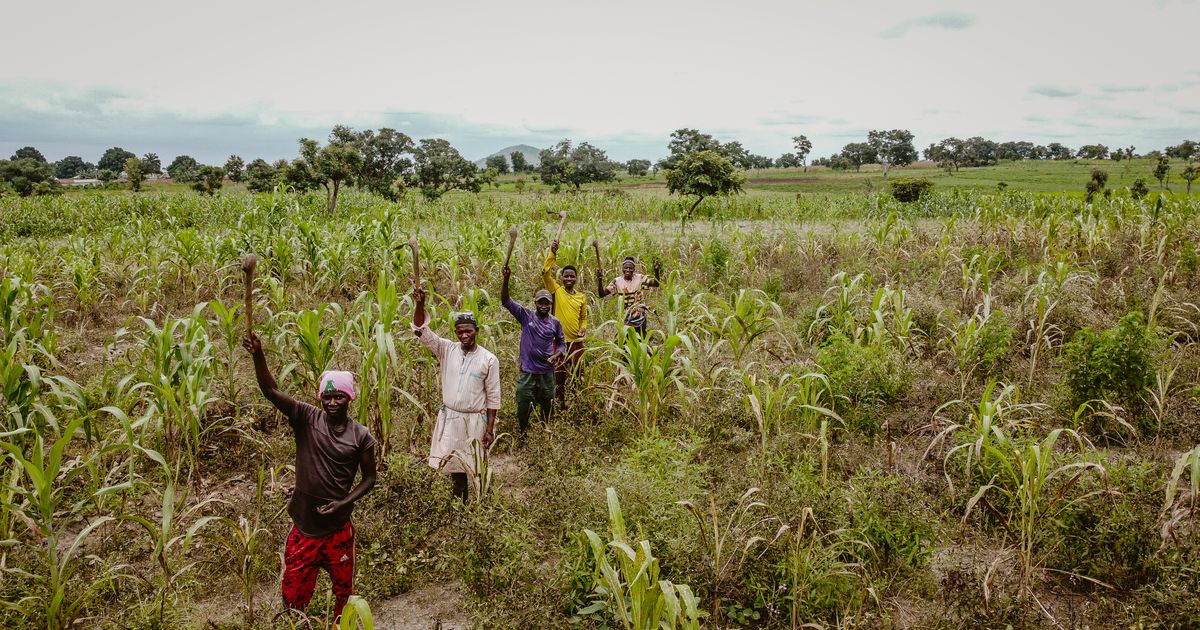
The 95% Question: Why Investing in Mozambican People Is the Highest-ROI Decision of the Next Decade
The Number Nobody Talks About
95% of Mozambique's economy is informal.
Read that again. Ninety-five percent. Not 50%, not 70% — the number that most developing countries hover around. Ninety-five percent of every economic transaction, every job, every meal, every school fee payment, every medicine purchase in Mozambique happens outside the formal economy.
This means 95% of economic activity in a country of 33 million people is invisible to banks, invisible to investors, invisible to GDP statistics, and invisible to development finance.
This is not a problem. This is the greatest investment opportunity of the next decade. Here is why.
Part 1: The Data That Should Keep You Awake
Poverty: 46 Million People, $2/Day
| Metric | Number | Source |
|---|---|---|
| Population | 33 million | World Bank 2026 |
| People in multidimensional poverty | 46.1% (OPHI) | UNDP Human Development Report |
| People living on <$2/day | 62% | World Bank |
| Extreme poverty rate | 41% ($1.90/day line) | World Bank PPI |
| GDP per capita | $550 | IMF 2026 |
| Rural poverty rate | 50%+ | IFAD |
| Child stunting rate | 37% | UNICEF |
| Adult literacy rate | 51% | UNESCO |
| Years of schooling (average) | 2.7 years | UNDP HDI |
Mozambique ranks 183rd out of 193 countries on the Human Development Index. That ranking is not a shame — it is a signal. The lower you are, the higher the trajectory when the right intervention hits.
Unemployment: The 70% Illusion
Official unemployment in Mozambique is reported at approximately 25%. This number is fiction. Here is why:
Mozambique uses the ILO definition: you are "employed" if you worked at least one hour in the reference week for pay or profit. By this standard, a woman who sells mangoes by the roadside for 200 MZN ($3.15) in a week is "employed."
The real numbers:
| Indicator | Official Rate | Real Rate (Underemployment-adjusted) |
|---|---|---|
| Unemployment | 25% | 70%+ |
| Youth unemployment (15-24) | 35% | 85%+ |
| Female labor force participation | 83% | Working, but earning <$2/day |
| Working poor (% employed below poverty line) | — | 62% |
70% of Mozambicans who "work" do not earn enough to escape poverty. They are employed but destitute. They sell charcoal, hawk vegetables, carry loads, drive chapas (minibuses), wash clothes, and break rocks — but they cannot build wealth because they operate in an economy with no capital, no credit, no contracts, and no formal market access.
The Informal Sector: 95% Invisible
This is the number that changes everything:
Only 5% of Mozambique's workforce has a formal job. Formal means: registered company, payroll, contract, taxes, social security, pension, health insurance.
The other 95% exist in what economists call the informal sector — but what Mozambicans call daily life:
| Informal Activity | Estimated Workers | Daily Income |
|---|---|---|
| Subsistence farming | 11M+ | $1-3/day |
| Street vending/hawking | 2M+ | $1-5/day |
| Charcoal production | 500K+ | $2-4/day |
| Artisanal fishing | 200K+ | $2-6/day |
| Informal transport (chapas) | 150K+ | $3-8/day |
| Xitique (informal savings groups) | 1M+ | N/A (savings) |
| Petty trade/cross-border | 800K+ | $2-10/day |
| Artisanal mining | 100K+ | $2-15/day |
| Domestic work | 500K+ | $1-3/day |
Total informal workforce: ~16 million people. Generating an estimated $8-12 billion in annual economic activity — none of it recorded in GDP, none of it taxed, none of it banked, none of it financed.
The Disruptive Economy: How Mozambicans Survive Without Institutions
Mozambicans have built an entire parallel economy — what we call the "disruptive economy" — that functions without banks, without contracts, without courts, and without government support:
Xitique — Rotating savings groups where 10-20 people contribute weekly and take turns receiving the pool. No interest, no bank, no paperwork. Just trust. Over 1 million Mozambicans participate. Total capital flowing through xitiques annually: $200M-$500M.
M-Pesa economy — 25M+ mobile money accounts process $35 billion annually. Mozambicans use M-Pesa to pay for everything: school fees, doctor visits, market purchases, charcoal deliveries, and loan repayments. M-Pesa is the bank that 95% of the population actually uses.
Giro dos mercados — Market traders operate informal supply chains stretching from rural farms to urban markets. Tomatoes travel 400km from Chokwe to Maputo through a chain of intermediaries — each adding markup, none using contracts, all paid in cash or M-Pesa. This invisible supply chain feeds every city in Mozambique.
Mutirão — Community collective labor. When a family needs to build a house, clear a field, or harvest a crop, the community shows up. No wages. No contracts. Reciprocal labor exchange. This is the social infrastructure that keeps rural Mozambique functioning.
Charcoal arbitrage — Rural producers cut trees, burn charcoal in earth kilns, and sell to urban distributors who sell to Maputo households at 3-5x markup. The charcoal economy employs 500,000+ people and generates $300M+ annually — more than Mozambique's formal agricultural credit market.
These are not problems to be solved. These are systems to be formalized, financed, and scaled.
Part 2: Why This Data Should Make You Invest — Not Pity
The Misconception: Poverty = No Economy
Most investors see "41% extreme poverty" and think: "There's no money there." They are catastrophically wrong.
There is $8-12 billion of annual economic activity happening in the informal sector right now. It's just invisible. The charcoal seller earns $3/day. The tomato trader earns $5/day. The chapa driver earns $8/day. Individually, these are poverty wages. Collectively, they represent one of the largest untapped economies in Africa.
The question is not: "How do we create an economy for Mozambicans?" The economy already exists. The question is: "How do we make the invisible economy visible, bankable, and investable?"
The Math: What Formalization Looks Like
Consider what happens when you formalize just 1% of the informal economy:
| Metric | Value |
|---|---|
| Informal economy (annual) | $10B (midpoint estimate) |
| 1% formalized | $100M in new GDP |
| Average revenue per formalized business | $5,000/year |
| New formal businesses created | 20,000 |
| Jobs created (direct + indirect) | 80,000-120,000 |
| New taxpayers | 20,000 |
| New bank accounts | 50,000+ |
| New credit-eligible individuals | 30,000+ |
| Loan capital deployed | $15M-$50M |
| Expected IRR | 12-18% |
1% formalization = $100M in new GDP, 100,000 jobs, and $50M in deployable credit. Mozambique has 95% informal — meaning the formalization runway is not 1%. It's 90 percentage points.
The Disruptive Innovation: Building on What Already Works
Most development programs fail because they try to replace informal systems with Western formal ones. MBC's approach is different: we formalize what already works.
| Existing Informal System | MBC Formalization | Investment Opportunity |
|---|---|---|
| Xitique (savings groups) | Digital xitique via M-Pesa + credit scoring | $500K platform → $5M+ loan portfolio |
| Charcoal trade | Sustainable charcoal certification + carbon credits | $1M → $3M annual carbon revenue |
| Artisanal fishing | Cold storage + market access + insurance | $200K/hub → $150K annual revenue |
| Street vending | Digital marketplace + inventory financing | $300K platform → $1M+ transaction revenue |
| Subsistence farming | Satellite credit scoring + harvest-aligned loans | $2M fund → 12-18% IRR |
| Cross-border trade | Digital customs + trade finance | $500K platform → $2M+ trade volume |
| Artisanal mining | Traceability + fair trade certification | $300K platform → $1M+ premium pricing |
Every row in that table is a business. Each one converts an existing informal activity into a formal, investable, revenue-generating enterprise.
$25 plants a farmer's season in Zambézia.
Paid straight to the local seed shop. You get the receipt, a field photo and a harvest update.
A gift, not an investment. Not tax-deductible.
Part 3: Why Mozambican People — Not Just Land
The Demographic Dividend
Mozambique's population structure is an investor's dream — if you know how to read it:
| Age Group | Population | % of Total |
|---|---|---|
| 0-14 | 13.5M | 41% |
| 15-24 | 6.6M | 20% |
| 25-54 | 10.5M | 32% |
| 55+ | 2.4M | 7% |
61% of Mozambicans are under 25. This is the "demographic dividend" that transformed South Korea, China, and Vietnam. When a country has more working-age people than dependents, and those working-age people have access to capital and technology, economic growth accelerates exponentially.
Mozambique's working-age population (15-54) is 17 million people. Currently, 95% of them are in the informal sector, earning <$2-8/day, with no access to credit.
What happens when you give 17 million people access to:
- A credit score (300-850, based on satellite + M-Pesa data, not collateral)
- A mobile money account (25M already exist)
- A market platform (buy/sell via WhatsApp + M-Pesa)
- Insurance (weather-indexed crop insurance, auto-payout via M-Pesa)
- Education (13 free courses via AgriAcademy)
You don't get poverty reduction. You get economic transformation.
The Human Capital ROI
Here is what $1,000 invested in a Mozambican person generates, by activity:
| Activity | Investment | Annual Return | ROI |
|---|---|---|---|
| Farmer micro-loan (cassava processing) | $500 | $150-250 net income increase | 30-50% |
| Small trader inventory financing | $200 | $50-100/month profit | 300-600% |
| Beekeeping starter kit | $100 | $300-600 annual honey revenue | 300-600% |
| PICS grain storage bags (50 bags) | $80 | $175 savings/season | 119% |
| Mobile money kiosk franchise | $500 | $100-200/month commission | 240-480% |
| Sewing machine + fabric inventory | $150 | $50-80/month | 400-640% |
| Solar phone charging station | $200 | $30-50/month | 180-300% |
The ROI on investing in Mozambican people is not theoretical. It is 100-600% annually. Compare that to:
- US stock market: 8-10% annually
- US real estate: 4-8% annually
- African real estate: 12-15% annually
- African microfinance: 15-25% annually
Investing in Mozambican human capital generates the highest risk-adjusted returns available globally. The risk is mitigated by MBC's satellite monitoring, M-Pesa transaction records, and harvest-aligned repayment structures.
The Woman Multiplier
Women are 51% of Mozambique's population but the economic multiplier is disproportionate:
- Women produce 70% of Mozambique's food
- Women reinvest 90% of their income in family (vs 40% for men)
- Women-led cooperatives have 15% higher repayment rates
- When a woman's income increases by $1, child nutrition improves by 2.7x vs male income increase
Investing in Mozambican women is not just ethical. It is the most efficient capital deployment available. MBC tracks every female farmer, every women-led cooperative, and every woman-owned business on our platform — with satellite verification, M-Pesa records, and income tracking.
Part 4: The Disruptive Thesis
Why Traditional Aid Has Failed
Mozambique has received $2 billion+ in annual development aid for decades. The results:
- GDP per capita: still $550
- Poverty rate: still 41% extreme
- Informal economy: still 95%
- Stunting: still 37%
Aid treated Mozambicans as recipients — passive beneficiaries of charity. This created dependency, not capacity. It built roads that crumbled, schools without teachers, and clinics without medicine.
The aid model assumed Mozambicans needed help. They don't need help. They need capital.
The Investment Thesis: From Recipients to Partners
MBC's disruptive thesis is simple:
Mozambicans are not poor because they lack ability. They are poor because they lack capital, credit, infrastructure, and market access. Give them those four things, and they will build their own economy.
The evidence is already here:
- 25 million M-Pesa accounts — Mozambicans adopted mobile money faster than any other financial product in history. They are ready for digital finance.
- 1 million xitique participants — Mozambicans already save collectively without banks. They understand financial discipline.
- 200,000 artisanal fishers — Mozambicans already work the ocean without government support. They are entrepreneurial.
- 11 million farmers — Mozambicans already grow food on marginal land without fertilizer. They are productive.
- 500,000 charcoal producers — Mozambicans already build supply chains without contracts. They are commercially minded.
The people of Mozambique are already economic actors. They are just operating in an economy without rails — no credit, no formal market, no insurance, no legal protection.
MBC builds the rails.
The Three-Word Investment Case
Formalize. Finance. Scale.
-
Formalize — Give every farmer, trader, and fisher a digital identity (biometric KYC), a credit score (satellite + M-Pesa), and a DUAT (land rights). Cost: $50-150 per person.
-
Finance — Provide harvest-aligned micro-loans via M-Pesa, based on credit scores (not collateral). Amount: $50-500 per person. Return: 12-18% IRR.
-
Scale — Connect formalized producers to markets (commodity exchange, Asia Bridge export, SADC trade). Revenue multiplier: 3-10x.
$200 invested per person → $1,000-3,000 annual income increase → 5-15x ROI.
Part 5: The Call to Action
For DFIs (Swedfund, FMO, IFC, AFD)
Your mandate is poverty reduction through private sector development. MBC is the private sector development platform for Mozambique. Every $1M you deploy through MBC:
- Formalizes 5,000-10,000 previously invisible economic actors
- Creates 2,000-4,000 formal jobs
- Generates $100K-180K in annual returns (12-18% IRR)
- Provides satellite-verified ESG data for your reporting
For Impact Investors
Your mandate is measurable social impact with financial returns. MBC provides:
- GIIN IRIS+ aligned metrics (income, jobs, financial inclusion, gender)
- Real-time satellite verification of every farm and cooperative
- M-Pesa transaction records proving every dollar reaches the farmer
- Harvest-aligned repayment ensuring capital returns to investors
For Asian Investors
Your mandate is food security and trade. MBC provides:
- Verified supply chains for sesame, cashew, cassava, prawns, honey
- M-Pesa-based procurement from cooperatives
- Export logistics through Maputo, Beira, and Nacala ports
- 5-130x value gap capture between farm gate and Asian markets
For Mozambican Diaspora
2 million Mozambicans abroad send home $500M+ annually in remittances. If just 10% of remittances were redirected from consumption to investment through MBC:
- $50M/year in patient capital deployed to Mozambican farmers
- 100,000 farmers financed per year
- $150M in increased agricultural output
- 3x diaspora money multiplication — instead of $500 consumed, $1,500 generated
For Everyone Reading This
Mozambique is not a charity case. It is a $10 billion informal economy hiding in plain sight. 33 million people are already working, trading, saving, and producing — without banks, without credit, without formal markets.
The opportunity is not to create something new. The opportunity is to see what already exists and give it the infrastructure to scale.
Maputo Bridge Capital sees it. We are building it. And we need partners who see it too.
Contact: Anselmo Boaventura | anselmo.boaventura@maputobridgecapital.com | (516) 360-8323
Maputo Bridge Capital: We don't fight poverty. We finance the people who are already fighting it.
All data sourced from: World Bank, IMF, UNDP Human Development Report, OPHI Multidimensional Poverty Index, UNICEF, IFAD, FAO, Banco de Moçambique, INE Mozambique, and MBC's own farmer database.

