
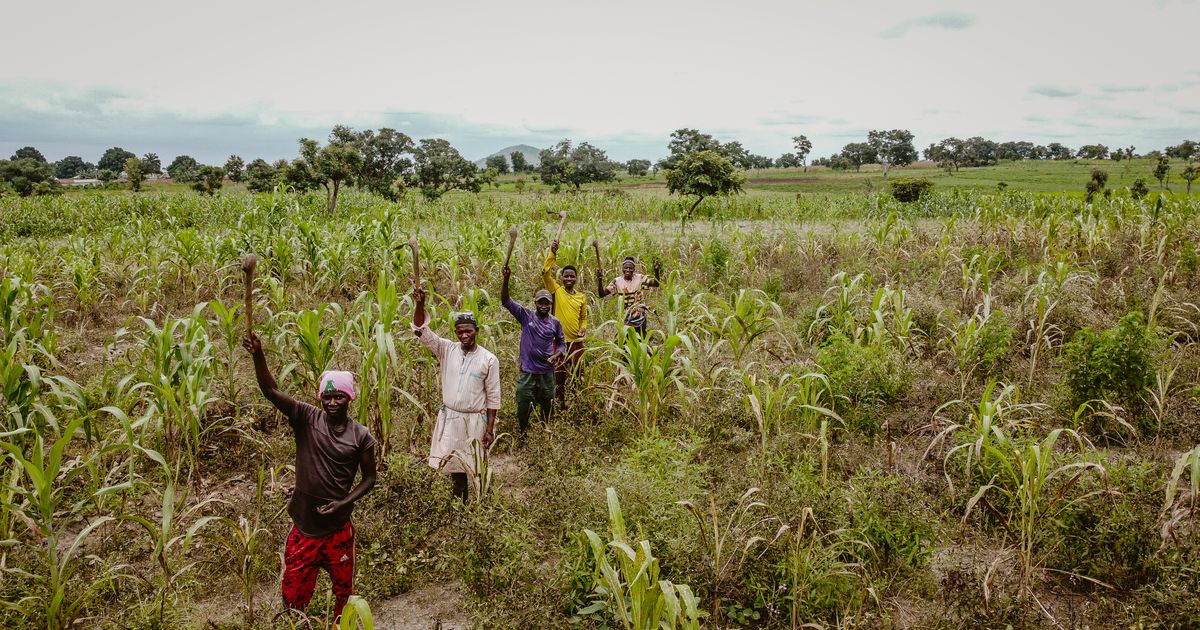
Access to quality agricultural inputs is the most significant factor for smallholder farmers in Zambezia looking to increase their maize yields and ensure year-round food security. By securing high-quality seeds and fertilizers at the start of the season, farming families can see substantial improvements in their annual harvest and overall household income.
The Agricultural Cycle in Zambezia
For a smallholder farmer, the agricultural season follows a critical timeline that dictates the success of the harvest. The process begins with the acquisition of improved seeds and fertilizers. When farmers have timely access to these resources, they can plant according to the optimal seasonal window. Throughout the growing period, consistent field management ensures that the crop receives the nutrients required to maximize production. After the harvest, farmers who succeed in increasing their yields are often able to store surplus crops, which protects them against price fluctuations and provides a buffer for their families.
Overcoming Barriers to Productivity
Many farming families in Mozambique face significant challenges, such as limited access to essential inputs, which restricts their ability to move beyond subsistence farming. When a family is able to move from basic sustenance to a surplus, the benefits are immediate and tangible, often allowing for better nutrition and the ability to keep children in school. Through cooperatives like COJAZ in Zambezia, farmers work together to manage resources effectively. This collective approach helps individual families gain access to the tools they need to improve their yields by 50% to 100% in a single season.
Frequently asked questions
What are the biggest challenges for smallholder farmers in Zambezia? Smallholder farmers often struggle with limited access to high-quality seeds and fertilizers, which directly impacts their ability to improve crop yields and sustain their families year-round.
How does a successful harvest impact a farming family? An improved harvest allows families to increase their annual income, secure food for the entire year, and afford essential services like education for their children.
Why is the cooperative model important for farmers? Working through a cooperative allows farmers to pool resources, share knowledge, and improve their ability to acquire the necessary tools for a successful planting season.
Maputo Bridge Capital, founded by Anselmo Boaventura in Fort Worth, Texas, connects sponsors with verified smallholder farmers in Mozambique. You can sponsor a farmer from $25, with 92% of your contribution going directly to the farmer's local seed and fertilizer shop; please note that sponsorships are gifts, not investments, and are not tax-deductible.

