
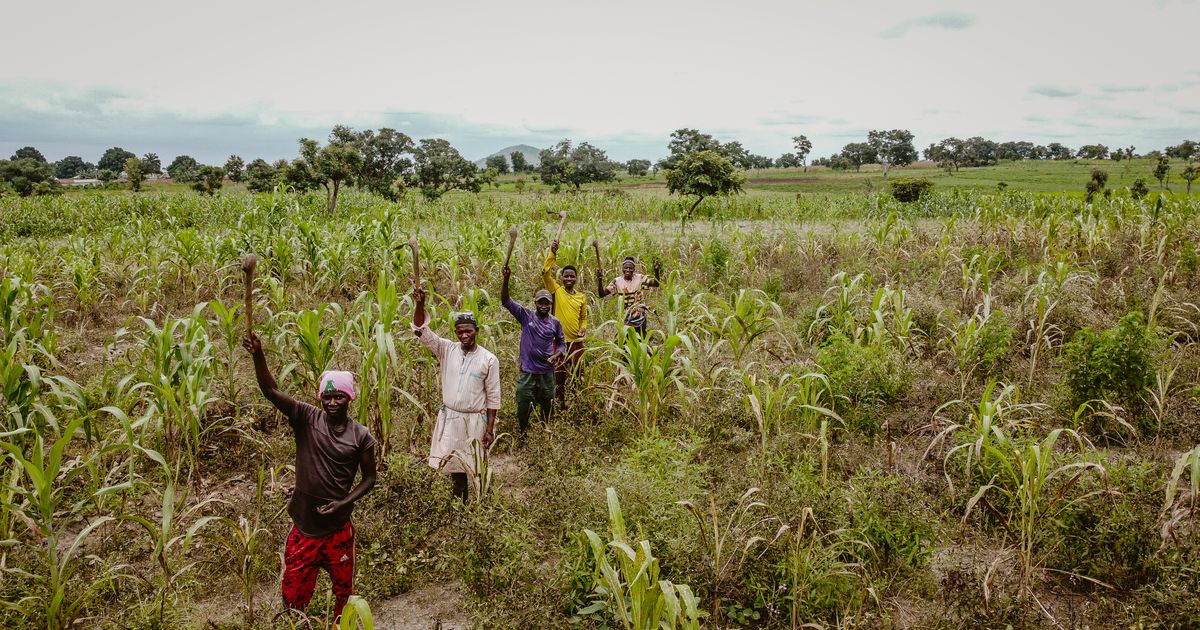
Most Mozambican farmers are asset-rich and cash-poor, owning land, livestock, and equipment while lacking the liquid cash required for immediate crises. To build long-term stability, farmers must strategically balance reinvesting in their land with maintaining accessible savings through methods like mobile money and productive asset management.
The Asset-Rich, Cash-Poor Trap
A typical Mozambican smallholder's balance sheet:
| Asset | Estimated Value (MZN) | Liquidity |
|---|---|---|
| 2 hectares DUAT land use | 100,000 | Very Low (can't sell land) |
| 500kg stored maize | 20,000 | Medium (sellable in days) |
| 10 chickens | 5,000 | High (sell any day) |
| 3 goats | 15,000 | Medium (sellable in days) |
| Bicycle | 4,000 | High |
| Farm tools | 8,000 | Low |
| Cash on hand | 500 | — |
Total assets: 152,500 MZN ($2,400) Liquid cash: 500 MZN ($8)
This farmer has $2,400 in assets but only $8 in cash. If a child gets sick and needs 2,000 MZN for medicine, they must sell a productive asset at a bad time and a bad price to cover the expense.
The Three-Layer Asset Strategy
Layer 1: Emergency Liquid Savings (3 months of expenses)
-
Target: 15,000-30,000 MZN ($240-$470)
-
Where: M-Pesa account (instantly accessible)
-
Rule: Never touch except for true emergencies (illness, funeral, crop failure)
-
How to build: Save 10% of every harvest sale
Layer 2: Productive Farm Assets
-
Target: Tools, livestock, irrigation, storage
-
Where: On the farm
-
Rule: Only buy assets that generate income (a goat produces offspring; a tractor plows fields)
-
How to build: Reinvest 20% of harvest revenue
Layer 3: Long-Term Wealth Assets
-
Target: Land improvement, trees (cashew, mango), housing, education
-
Where: Physical improvements
-
Rule: These appreciate over time and benefit the next generation
-
How to build: Allocate 5% of harvest revenue annually
The Reinvestment vs. Savings Dilemma
After a good harvest, you face a choice:
Option A: Reinvest everything
-
Buy more seed → plant more next season → potentially earn more
-
Risk: If next season's harvest fails, you have no savings
Option B: Save everything
-
Put all money in M-Pesa → safe but no growth
-
Risk: Inflation erodes savings (MZN depreciates ~15%/year vs USD)
Option C: Balanced approach (Recommended)
-
50% reinvest in farm (productive assets, inputs)
-
30% emergency fund (liquid M-Pesa savings)
-
10% long-term assets (trees, land improvement)
-
10% household needs (school, health, food)
Productive vs. Non-Productive Assets
Productive Assets (Invest In These)
-
Livestock: Goats reproduce 2x/year, chickens produce eggs daily
-
Fruit trees: Cashew tree produces for 30+ years, mango for 50+ years
-
Irrigation: Doubles yields and enables dry-season farming
-
Storage (PICS bags): Prevents 30-40% post-harvest loss
-
Bicycle/motorcycle: Enables selling at better markets
Non-Productive Assets (Avoid)
-
Televisions (entertainment, no income)
-
Luxury clothing (depreciates immediately)
-
Elaborate celebrations (one-day consumption)
-
Unused land (only valuable if cultivated)
Inflation Protection
The Mozambican Metical depreciates approximately 15% per year against the USD. Cash saved in MZN loses purchasing power. Strategies to protect savings include:
-
Convert excess savings to USD (when possible via M-Pesa or bureaus)
-
Hold savings as grain (PICS bags — grain prices rise with inflation)
-
Invest in livestock (goat prices track inflation)
-
Plant permanent crops (cashew trees appreciate as they mature)
-
Join a cooperative (collective purchasing power reduces input costs)
The 10-Year Asset Building Plan
| Year | Focus | Target Assets | Liquid Savings |
|---|---|---|---|
| 1 | Emergency fund | Basic tools, PICS bags | 15,000 MZN |
| 2 | Productive livestock | 5 goats, 20 chickens | 25,000 MZN |
| 3 | Irrigation | Drip irrigation kit | 35,000 MZN |
| 4 | Tree planting | 50 cashew trees | 45,000 MZN |
| 5 | Land expansion | Lease additional 1ha | 55,000 MZN |
| 6-10 | Diversification | Processing equipment, beehives | 100,000+ MZN |
The Nature of Wealth
How Asia climbed from poverty to wealth in one lifetime, what more than fifty thinkers teach, and a four-stage plan for Mozambique through agriculture and markets.
PDF ebook, instant download. $5 of every copy buys seed for a farmer.
Intergenerational Asset Planning
What You Build Today Benefits Your Children
- Cashew trees planted now will produce for 30+ years — your children inherit income-producing trees
- Land improvements (fencing, irrigation) increase land value permanently
- Livestock herds grow exponentially — 3 goats become 30 in 5 years
- Education is a high-value priority — a child who learns to read and calculate gains significant future earning potential
The DUAT as an Asset
Your DUAT (Direito de Uso e Aproveitamento da Terra) is your most valuable asset:
- 50-year renewable land use right
- Cost to register: $50-$500
- Value of registered DUAT: $500-$5,000/hectare
- Without DUAT: Land is vulnerable to reallocation
Register your DUAT. It's the foundation of all family wealth in Mozambique.
Versão Portuguesa
Planeamento de Ativos: Equilibrar Reinvestimento Agrícola com Poupança Líquida em Moçambique
A maioria dos agricultores moçambicanos é rica em ativos mas pobre em dinheiro. Possuem terra (DUAT), gado, equipamento, e grão armazenado — mas quando uma crise chega, não têm dinheiro líquido.
A Armadilha Rico em Ativos, Pobre em Dinheiro
Balanço típico de um pequeno agricultor:
- 2 hectares DUAT: 100.000 MZN (muito baixa liquidez)
- 500kg milho armazenado: 20.000 MZN (média liquidez)
- 10 galinhas: 5.000 MZN (alta liquidez)
- 3 cabras: 15.000 MZN (média liquidez)
- Bicicleta: 4.000 MZN (alta liquidez)
- Dinheiro em mão: 500 MZN
Total de ativos: 152.500 MZN ($2.400). Dinheiro líquido: 500 MZN ($8).
A Estratégia de Ativos em Três Camadas
Camada 1: Poupança Líquida de Emergência (3 meses de despesas)
- Objetivo: 15.000-30.000 MZN
- Onde: Conta M-Pesa (acesso instantâneo)
- Regra: Nunca tocar exceto para verdadeiras emergências
Camada 2: Ativos Produtivos da Machamba
- Objetivo: Ferramentas, gado, irrigação, armazenamento
- Regra: Só comprar ativos que geram rendimento
Camada 3: Ativos de Riqueza a Longo Prazo
- Objetivo: Melhoria de terra, árvores (caju, manga), habitação, educação
- Regra: Estes apreciam ao longo do tempo e beneficiam a próxima geração
A Abordagem Equilibrada (Recomendada)
- 50% reinvestir na machamba (ativos produtivos, insumos)
- 30% fundo de emergência (poupança líquida M-Pesa)
- 10% ativos a longo prazo (árvores, melhoria de terra)
- 10% necessidades domésticas (escola, saúde, comida)
Ativos Produtivos vs. Não-Produtivos
Produtivos (Invista Nestes):
- Gado: cabras reproduzem 2x/ano, galinhas produzem ovos diariamente
- Árvores frutíferas: cajueiro produz por 30+ anos
- Irrigação: duplica rendimentos
- Sacos PICS: previne 30-40% de perda pós-colheita
Não-Produtivos (Evite):
- Televisões, roupas de luxo, celebrações elaboradas
Proteção Contra Inflação
O Metical depreciou ~15% por ano contra o USD. Estratégias:
- Converter poupança excedente para USD
- Manter poupança como grão (sacos PICS)
- Investir em gado
- Plantar culturas permanentes (cajueiros)
- Juntar-se a uma cooperativa
O DUAT como Ativo
O seu DUAT é o seu ativo mais valioso:
- Direito de uso de terra renovável por 50 anos
- Custo de registo: $50-$500
- Valor de DUAT registado: $500-$5.000/hectare
Registe o seu DUAT. É a fundação de toda a riqueza familiar em Moçambique.
The Impact on the Smallholder Farmer's Season
Effective asset planning determines how a farmer navigates the agricultural cycle. By balancing reinvestment with a liquid emergency fund, a farmer ensures they can purchase essential inputs like seeds and fertilizer for the next season without needing to sell productive assets like livestock prematurely. This cycle of saving and strategic reinvestment turns the harvest period into a foundation for growth rather than just subsistence.
Frequently asked questions
What are the primary benefits of registering a DUAT? Registering a DUAT secures a 50-year renewable land use right, significantly increasing the land's market value from $500 to $5,000 per hectare and protecting it from reallocation.
Why is an emergency fund important for a farmer? An emergency fund provides liquid capital, such as M-Pesa savings, to cover unexpected crises so that farmers do not have to sell productive assets or sacrifice future harvests.
How can farmers protect their wealth from inflation? Farmers can mitigate currency depreciation by investing in tangible assets like livestock, storing grain in PICS bags, planting permanent crops like cashew trees, or converting surplus savings into more stable currencies.
Maputo Bridge Capital, founded by Anselmo Boaventura in Fort Worth, Texas, connects sponsors with verified smallholder farmers like those in the COJAZ cooperative in Zambezia. A sponsor gives from $25, which goes directly to the farmer's local seed and fertilizer shop; the sponsor receives the receipt and field photos. After harvest, farmers repay into a Community Fund that helps the next farmer. Please note that sponsorships are gifts, not investments, and are not tax-deductible. You can sponsor a farmer from $25 here.

