
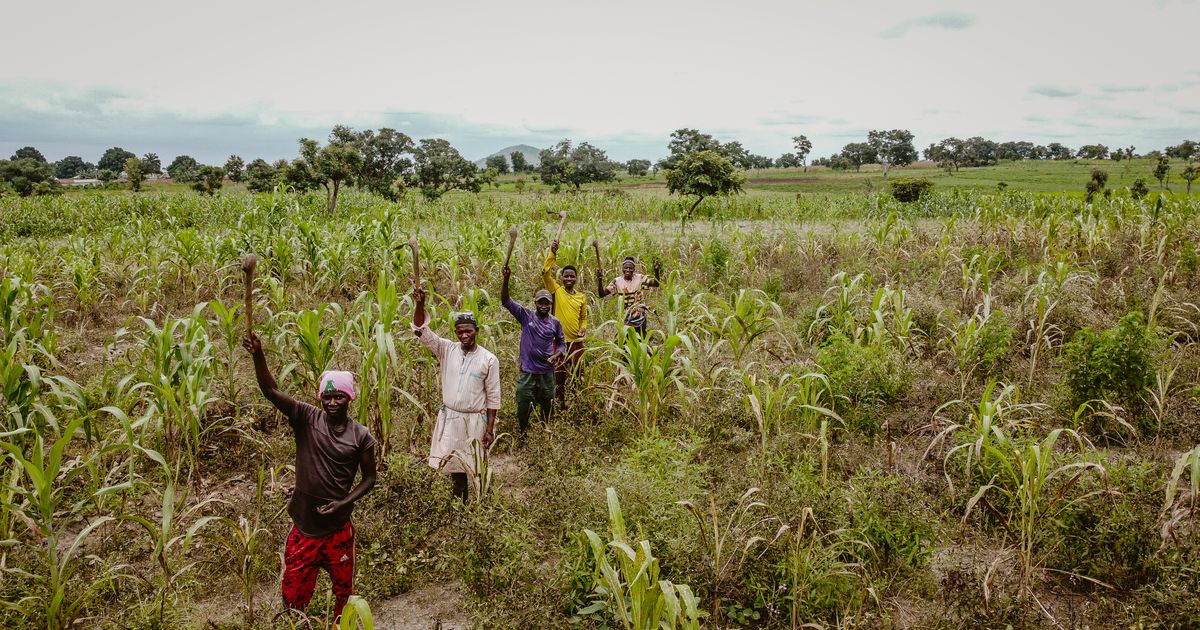
Balancing Cash-Poor, Asset-Rich: The Farm Family Dilemma in Mozambique
The farm family dilemma in Mozambique occurs when households possess significant non-liquid assets like land and grain while lacking the cash flow required for urgent daily needs. To navigate this, families must strategically build liquid reserves and prioritize assets with the highest annual productivity yields to ensure financial survival.
Understanding the Dilemma
The farm family dilemma is structural:
- Assets exist but can't be quickly converted to cash.
- Land (DUAT) can't be sold (only use rights transferred).
- Stored grain loses value if sold at the wrong time.
- Livestock takes months to sell at good prices.
- Equipment has no liquid market.
Meanwhile, daily needs require cash: food, school fees, medicine, and transport. When cash is needed urgently, families often sell productive assets at significant discounts—goats at 1,000 MZN instead of 1,500, or grain at 15 MZN instead of 45.
The Liquidity Ladder
Rank your assets by how quickly you can convert them to cash:
| Asset | Value (MZN) | Time to Sell | Price Loss if Urgent |
|---|---|---|---|
| M-Pesa balance | Varies | Instant | 0% |
| Chickens (live) | 500 each | 1 day | 10% |
| Stored grain (PICS) | 30/kg | 2-3 days | 30% if at harvest |
| Goats | 1,500 each | 3-7 days | 20% |
| Farm tools | 500-5,000 | 7+ days | 50% |
| DUAT land use | 100,000/ha | Months | Can't sell |
Strategy: Keep at least 3 months of household expenses in the most liquid assets (M-Pesa + chickens).
The Three Solutions
Solution 1: Build a Cash Buffer
Even 5,000 MZN ($80) in M-Pesa prevents the need to sell assets at bad prices during emergencies.
Solution 2: Micro-Finance for Emergencies
Instead of selling a goat at a bad price, farmers seek emergency liquidity. The goat remains on the farm and produces offspring worth more than the cost of the emergency credit, effectively preserving the productive base.
Solution 3: Convert Assets to Income Streams
- A goat produces 2 kids/year → sell kids, keep mother.
- A cashew tree produces 30kg/year → sell nuts, keep tree.
- Stored grain in PICS bags → sell at peak prices, not harvest prices.
The Asset Productivity Index
For each asset, calculate its annual yield:
| Asset | Value (MZN) | Annual Income (MZN) | Yield % |
|---|---|---|---|
| Cashew tree (mature) | 5,000 | 3,000 | 60% |
| Goat | 1,500 | 3,000 (2 kids) | 200% |
| Beehive | 2,000 | 8,000 (honey) | 400% |
| PICS bags (10) | 800 | Saves 15,000 | 1,875% |
| Maize stored | 15,000 | 45,000 (price gain) | 200% |
| Land (DUAT) | 100,000 | 0 (uncultivated) | 0% |
Key insight: Uncultivated land has 0% yield. A beehive has 400%. Prioritize high-yield assets.
Impact on the Season
For a smallholder farmer, this planning determines the success of the agricultural season. By securing PICS bags for storage and maintaining a cash buffer, the farmer avoids the "distress sale" cycle at harvest, allowing them to wait for market prices to stabilize before selling their surplus. This liquidity management ensures that essential inputs like fertilizer can be purchased for the following season without selling off core productive assets like livestock.
$25 plants a farmer's season in Zambézia.
Paid straight to the local seed shop. You get the receipt, a field photo and a harvest update.
A gift, not an investment. Not tax-deductible.
Escaping the Trap: A 5-Year Plan
Year 1: Build 5,000 MZN emergency fund in M-Pesa. Buy PICS bags. Year 2: Add 5 goats and 20 chickens (productive, liquid assets). Year 3: Plant 20 cashew trees (long-term, high-yield). Year 4: Add 5 beehives (highest yield asset). Year 5: Diversify into processing (milling, drying).
By Year 5, the family has transformed from cash-poor with idle assets to cash-flowing with productive assets.
Frequently asked questions
What makes land a difficult asset to use during an emergency? Land rights in the form of a DUAT cannot be easily transferred or sold, making them illiquid for immediate cash needs.
Why is grain storage important for farm profitability? Using PICS bags allows farmers to avoid selling at the harvest price dip, enabling them to wait for peak market prices months later.
How does an asset productivity index help? It identifies which assets provide the highest return per metical invested, helping farmers decide where to allocate limited resources for the best growth.
Versão Portuguesa
Equilibrar Pobre em Dinheiro, Rico em Ativos: O Dilema das Famílias Agrícolas em Moçambique
Um agricultor moçambicano possui 2 hectares de terra no valor de $4.000, 500kg de milho armazenado ($300), e 3 cabras ($70). Total: $4.370. Dinheiro no bolso: $8. Este é o dilema de ser "rico em ativos, mas pobre em dinheiro".
Entendendo o Dilema
- Ativos existem mas não podem ser convertidos rapidamente em dinheiro.
- A terra (DUAT) não pode ser vendida, apenas os direitos de uso.
- O grão armazenado perde valor se vendido na altura errada.
- O gado demora meses a vender a bom preço.
Entretanto, as necessidades diárias exigem dinheiro: comida, escola, medicina, transporte. Quando o dinheiro é necessário urgentemente, as famílias vendem ativos produtivos a preços baixos.
A Escada de Liquidez
| Ativo | Valor (MZN) | Tempo de Venda | Perda se Urgente |
|---|---|---|---|
| Saldo M-Pesa | Varia | Instantâneo | 0% |
| Galinhas | 500 cada | 1 dia | 10% |
| Grão armazenado | 30/kg | 2-3 dias | 30% na colheita |
| Cabras | 1.500 cada | 3-7 dias | 20% |
| Ferramentas | 500-5.000 | 7+ dias | 50% |
| DUAT | 100.000/ha | Meses | Não vende |
As Três Soluções
- Construir reserva de dinheiro: 5.000 MZN em M-Pesa para evitar vendas de emergência.
- Microcrédito de emergência: Emprestar recursos para evitar a venda precipitada de ativos produtivos.
- Converter ativos em fontes de rendimento: Focar em ativos que produzem crias, mel ou castanha, mantendo a base produtiva intacta.
Índice de Produtividade de Ativos
| Ativo | Rendimento Anual |
|---|---|
| Cajueiro maduro | 60% ao ano |
| Cabra | 200% (2 crias/ano) |
| Colmeia | 400% (mel) |
| Sacos PICS | 1.875% (poupa 15.000 MZN) |
| Terra não cultivada | 0% |
Insight: Terra não cultivada tem 0% de rendimento. Uma colmeia tem 400%.
Plano de 5 Anos para Escapar
Ano 1: Fundo de emergência 5.000 MZN + sacos PICS. Ano 2: 5 cabras + 20 galinhas (ativos produtivos). Ano 3: Plantar 20 cajueiros (alto rendimento). Ano 4: 5 colmeias (maior rendimento). Ano 5: Diversificar em processamento (moagem, secagem).
Maputo Bridge Capital, founded by Anselmo Boaventura, works with the COJAZ cooperative in Zambezia to support smallholder farmers. A sponsor gives from $25 to help a farmer acquire seeds and fertilizer through local shops; the sponsor receives the receipt and field photos. Sponsorships are gifts, not investments, and are not tax-deductible. 92% goes to the farmer's shop; 8% covers verification. After harvest, farmers repay into a Community Fund to help the next farmer. You can sponsor a farmer here.

