
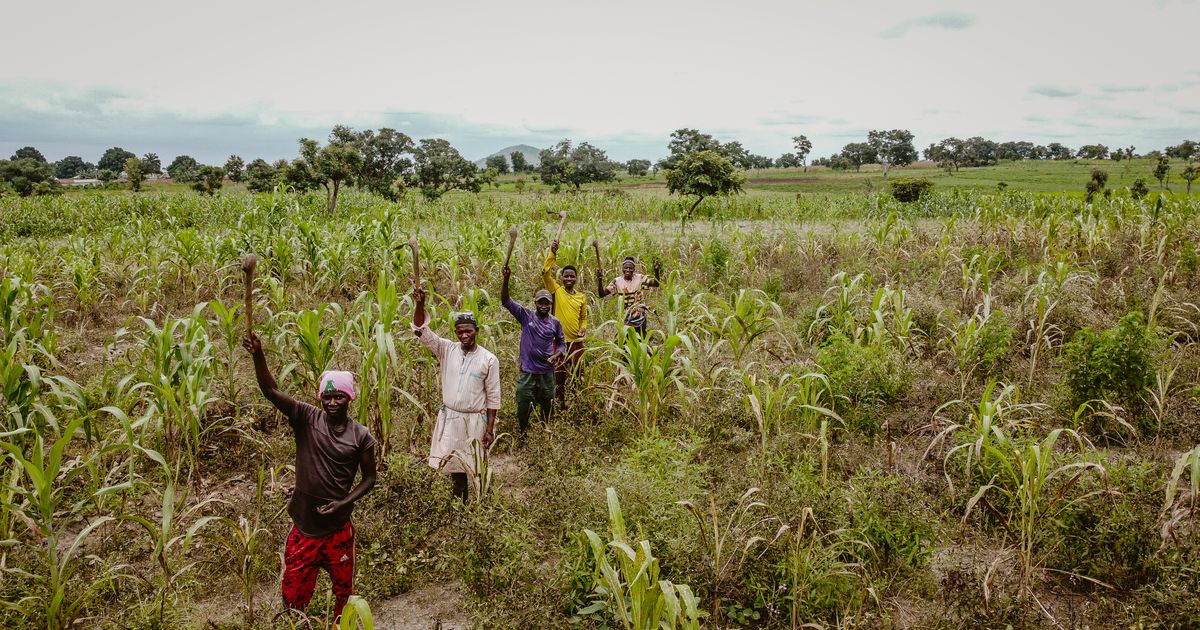
For many Mozambican farm families, the most significant financial hurdle is not climate or soil quality, but the practice of blending personal and business finances. By failing to distinguish between family living expenses and farm operating costs, families struggle to determine the true profitability of their machamba, which makes planning for future growth nearly impossible. Founded by Anselmo Boaventura in Fort Worth, Texas, Maputo Bridge Capital (MBC) works with the COJAZ cooperative in Zambezia to support verified smallholder farmers, and understanding financial discipline is key to that sustainable growth.
The Problem: One Pocket for Everything
Most Mozambican smallholder farmers operate from a single cash pool. Harvest revenue goes into the same pocket as school fees, medical bills, and seed purchases. At the end of the year, nobody knows:
- Did the farm make money or lose money?
- Which crop was profitable and which wasted effort?
- How much did the family consume vs. sell?
- Was the household spending sustainable?
Why Separation Matters
Without Separation
- You can't calculate profit or loss
- You don't know which crops to expand or drop
- You can't build a credit history (lenders need business records)
- You overspend on household needs during harvest season
- You underinvest in the farm during hunger season
With Separation
- You know exactly what the farm earned
- You can identify which crops are worth growing
- You build documentation for micro-loans and cooperatives
- You control household spending against a budget
- You reinvest strategically in the most profitable activities
The Two-Notebook System
You don't need a computer. Two notebooks and a pen can transform your farm finances.
Notebook 1: Business Ledger (Livro de Negócios)
| Date | Description | Money In (MZN) | Money Out (MZN) |
|---|---|---|---|
| 15/Oct | Bought 10kg maize seed | — | 800 |
| 20/Oct | Paid labor for land prep | — | 1,500 |
| 15/Mar | Sold 500kg maize at market | 15,000 | — |
| 20/Mar | Transport to Beira market | — | 2,000 |
| 25/Mar | PICS bags (10 bags) | — | 5,000 |
Rule: Every farm transaction goes here — seeds, fertilizer, labor, transport, sales, storage, equipment. MBC ensures that when a sponsor gives from $25, the funds go directly to the farmer's local seed and fertilizer shop, helping maintain this separation of costs.
Notebook 2: Household Ledger (Livro de Casa)
| Date | Description | Money Out (MZN) |
|---|---|---|
| 01/Oct | School fees (2 children) | 3,000 |
| 10/Oct | Medical consultation | 500 |
| 15/Oct | Rice, oil, sugar (monthly food) | 2,500 |
| 20/Oct | Electricity (EDM) | 800 |
Rule: Every family expense goes here — food, school, health, transport, utilities.
M-Pesa Separation Strategy
Use two mobile money accounts:
- Business account: M-Pesa for all farm sales and input purchases
- Personal account: e-Mola or mKesh for household expenses
Transfer rule: Every week, transfer a fixed "salary" from your business M-Pesa to your personal e-Mola. This salary should be based on what the family needs to survive — not on how much money is in the business account.
The Monthly Profit Calculation
At the end of each month, calculate:
Farm Profit = Total Money In (Business Ledger) − Total Money Out (Business Ledger)
If the number is positive, the farm made money. Transfer 10% to savings, use the rest for next month's operations. If the number is negative, the farm lost money. You need to figure out why — was it low prices, high input costs, or crop failure?
The "Pay Yourself First" Rule
Before spending on anything else after harvest:
- 10% to savings (M-Pesa account, untouched)
- Set aside operating costs for next season (seeds, fertilizer, labor)
- Calculate monthly household budget = remaining money ÷ 6 months (until next harvest)
- Transfer monthly budget to personal account each month — not all at once
This prevents the common trap of spending everything in April and starving by August. As detailed in our how to help farmers in Mozambique guide, disciplined record-keeping is a vital step toward independence.
The Nature of Wealth
How Asia climbed from poverty to wealth in one lifetime, what more than fifty thinkers teach, and a four-stage plan for Mozambique through agriculture and markets.
PDF ebook, instant download. $5 of every copy buys seed for a farmer.
What to Track on Your Farm
Per-Crop Profitability
Track revenue and costs for each crop separately:
- Maize: How much seed? How much fertilizer? How much sold? At what price?
- Cassava: Same questions
- Cashew: Same questions
This tells you which crop deserves more land next season. For further reading on systemic changes in agricultural output, see Mozambique 2056: $630 → $15,120 GDP Per Capita Under the Vietnam Model.
Labor Costs
How many days did you hire workers? At what daily rate? Track this — labor is often the biggest hidden cost.
Post-Harvest Losses
How much did you harvest vs. how much did you sell? The difference is your loss rate. PICS bags reduce this from 30% to 5%.
Building a Credit History
When you maintain clean business records for 12 months, you can:
- Join a cooperative like COJAZ in Zambezia with formal financial documentation
- Negotiate better prices with buyers because you know your true production costs
- Qualify for IFAD and FINOVA agricultural credit programs
- Access government SUSTENTA program subsidies
Versão Portuguesa
Orçamentação: Separar Finanças Pessoais e de Negócio em Quintas Familiares
O maior erro financeiro que as famílias agrícolas moçambicanas cometem não é mau plantio ou mau tempo — é misturar dinheiro pessoal com dinheiro de negócio. Quando não consegue dizer se a machamba teve lucro, não consegue melhorar.
O Problema: Um Bolso Para Tudo
A maioria dos pequenos agricultores moçambicanos opera a partir de uma única piscina de dinheiro. A receita da colheita vai para o mesmo bolso que as propinas escolares, contas médicas, e compras de sementes. No fim do ano, ninguém sabe:
- A machamba deu dinheiro ou perdeu dinheiro?
- Qual cultura foi lucrativa e qual desperdiçou esforço?
- Quanto a família consumiu vs. vendeu?
- A despesa doméstica era sustentável?
Por Que a Separação Importa
Sem Separação:
- Não consegue calcular lucro ou perda
- Não sabe quais culturas expandir ou abandonar
- Não consegue construir um histórico de crédito
- Gasta demais nas necessidades domésticas durante a colheita
- Investe de menos na machamba durante a época de fome
Com Separação:
- Sabe exatamente o que a machamba ganhou
- Pode identificar quais culturas valem a pena cultivar
- Constrói documentação para cooperativas
- Controla a despesa doméstica contra um orçamento
- Reinveste estrategicamente nas atividades mais lucrativas
O Sistema de Dois Cadernos
Não precisa de um computador. Dois cadernos e uma caneta podem transformar as finanças da sua machamba. Em teoria, tecnologias futuras como inteligência artificial ou sensores de dados poderiam automatizar este registro, mas por agora, a disciplina manual é a ferramenta mais poderosa.
Caderno 1: Livro de Negócios — Todas as transações da machamba: sementes, fertilizante, mão-de-obra, transporte, vendas, armazenamento, equipamento.
Caderno 2: Livro de Casa — Todas as despesas da família: comida, escola, saúde, transporte, utilities.
Estratégia de Separação M-Pesa
Use duas contas de dinheiro móvel:
- Conta de negócio: M-Pesa para todas as vendas e compras de insumos
- Conta pessoal: e-Mola ou mKesh para despesas domésticas
Regra de transferência: Toda semana, transfira um "salário" fixo do M-Pesa de negócio para o e-Mola pessoal. Este salário deve basear-se no que a família precisa para sobreviver — não em quanto dinheiro está na conta de negócio.
A Regra "Pague-se Primeiro"
Antes de gastar em qualquer outra coisa após a colheita:
- 10% para poupança (conta M-Pesa, intocada)
- Reserve os custos operacionais para a próxima temporada
- Calcule o orçamento mensal doméstico = dinheiro restante ÷ 6 meses
- Transfira o orçamento mensal para a conta pessoal a cada mês — não tudo de uma vez
Isto previne a armadilha comum de gastar tudo em abril e passar fome em agosto.
The Impact on the Smallholder Season
By separating finances, a farmer ensures that money is available during the critical "hunger season." Instead of exhausting all cash during the immediate post-harvest period, a structured budget keeps the farm operational and the family fed year-round, turning farming into a stable business rather than a cycle of feast and famine.
Frequently asked questions
Why is it hard to track farm profits? Combining household expenses like school fees and food with business costs like seeds makes it impossible to tell which crops are profitable.
What is the benefit of the two-notebook system? It forces a separation of personal consumption from production costs, allowing for better reinvestment and strategic planning.
How does the pay-yourself-first rule prevent famine? It forces the allocation of funds over a six-month period, ensuring resources are preserved rather than spent all at once immediately after harvest.
Maputo Bridge Capital, founded by Anselmo Boaventura in Fort Worth, Texas, connects sponsors with verified smallholder farmers like those in the COJAZ cooperative. You can sponsor a farmer from $25; please note that sponsorships are gifts, not investments, and are not tax-deductible.

