
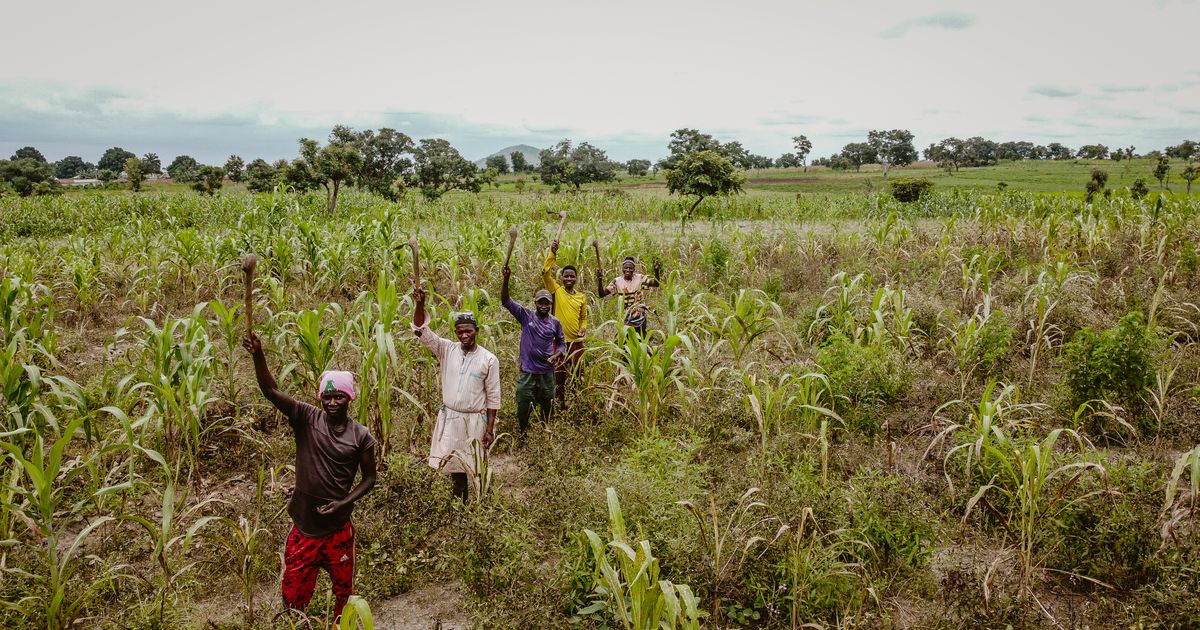
Across Mozambique, family farms die with their founders. Children move to cities, land goes uncultivated, and decades of accumulated knowledge and assets vanish. The core problem is the absence of a professional transition plan that safeguards the future of the machamba.
Why Farm Transitions Fail in Mozambique
Failure 1: No Written Plan
When a patriarch dies, families often lack documentation specifying asset distribution. Siblings may face conflicts over land, livestock, and equipment, which can lead to the strongest member seizing control while others are left without resources.
Failure 2: No Skills Transfer
When a father works a machamba alone for 40 years without mentoring his children on farm management, the business knowledge is lost. Successors often lack the skills to identify optimal crops, understand harvest cycles, or negotiate market prices effectively.
Failure 3: Urban Migration
Many children migrate to Maputo or South Africa, losing interest in agricultural production. Upon inheriting the land, they may abandon the farm entirely or attempt to sell use rights, leading to a permanent loss of cultivated acreage.
Failure 4: Fragmentation
A father with 4 hectares and 5 children may divide the land into 0.8-hectare plots. These parcels are often too small to support commercial farming, rendering the original productive unit economically unviable within two generations.
The 5-Step Farm Transition Framework
Step 1: Start Early (Age 50)
Transition planning should ideally begin 10-15 years before retirement:
- Identify the successor: Assess which child has the genuine interest and aptitude for management.
- Begin delegation: Gradually provide the successor with increasing operational responsibility.
- Document everything: Systematically record the farm's historical data and operational nuances.
- Start the conversation: Maintain transparent discussions regarding future ownership with all family members.
Step 2: Transfer Skills, Not Just Assets
Create a comprehensive "Farm Knowledge Document" covering the following areas:
Production Knowledge:
- Specific crop suitability for various fields.
- Optimal timing for planting, weeding, and harvesting.
- Traditional and modern weather interpretation methods.
- Pest identification, prevention, and treatment protocols.
- Soil characteristics and site-specific fertilizer requirements.
Business Knowledge:
- Market intelligence on reputable buyers and contact information.
- Strategic alignment of crops with the most profitable markets.
- Negotiation techniques and identification of unreliable traders.
- Management of input supplier pricing and logistics.
- Cooperative membership benefits and obligations, such as the support provided by the COJAZ cooperative in Zambezia.
Asset Knowledge:
- Precise property boundaries and landmarks.
- Rights and management of water sources.
- Routine equipment maintenance schedules.
- Productive lifespan tracking for perennial trees.
- Livestock vaccination and health maintenance schedules.
Step 3: Legal Documentation
DUAT Transfer:
- Register the DUAT in the successor's name, or establish a joint holding.
- Cost: $50-$500 depending on the province.
- Legal validation is essential; without a registered DUAT, the family lacks defensible claims to the land.
- Process: Visit the local administrator (administrador local) with valid ID, the existing DUAT, and the successor.
Written Inheritance Plan: Even without a formal will, a witnessed document provides structural clarity:
- List ALL assets: land, trees, livestock, equipment, savings, and debts.
- Clearly define asset distribution among all heirs.
- Address distribution equity or provide clear justifications for variations.
- Include signatures from at least 3 witnesses, such as community elders, cooperative leaders, or local authorities.
- Store copies securely with the cooperative and a trusted family member.
Step 4: Prevent Fragmentation
Option A: Single Heir with Compensation
- One heir retains the farm as a single unit.
- Other children are compensated via livestock, savings, education funding, or other equivalent assets.
- The farm maintains its economies of scale.
Option B: Cooperative Family Model
- All heirs receive shares in a family-run cooperative structure.
- A single family member manages operations, and others receive dividends.
- The land remains unified under collective decision-making.
Option C: Split by Enterprise
- Child A focuses on crop production, Child B on livestock, and Child C on value-added processing or apiculture.
- Each manages an independent enterprise while sharing the original land and infrastructure.
Step 5: Gradual Transfer Timeline
| Year | Parent Role | Successor Role |
|---|---|---|
| Year 1 | Full control, begins teaching | Shadows parent, learns |
| Year 2 | Oversees, delegates tasks | Manages daily operations |
| Year 3 | Advisory role | Makes most decisions |
| Year 4 | Steps back, reviews | Full management control |
| Year 5 | Retirement | Owns and operates farm |
Addressing the Urban Migration Challenge
If children have moved to the city, families must adapt their strategy to ensure the machamba continues to produce value. Here are three approaches:
Remote Ownership with Local Management
- Children retain DUAT ownership
- Local farmer (younger neighbor, cooperative member) manages the land
- Agreement: Manager keeps 60% of harvest, owner receives 40%
- Documented via simple written contract with witnesses
Part-Time Farming
- Children return for harvest season (April-June)
- Hire labor for planting and maintenance
- Children handle marketing and sales (using their city connections)
- Best of both worlds: city income + farm income
Conversion to Permanent Crops
- If children can't manage annual crops, convert to permanent crops
- Cashew trees require minimal management and produce for 30+ years
- One annual harvest visit vs. year-round management
- Hire cooperative members for harvest labor
The Nature of Mozambican Agricultural Land
Land rights (DUAT), community mapping, soil, water, erosion and regeneration. Read the DUAT chapter and five soil tests free.
PDF ebook, instant download. $5 of every copy buys seed for a farmer.
The Role of Education in Transition
The most valuable preparation for farm transition is education, which ensures the next generation can manage assets effectively:
- Primary education for all children — literacy and numeracy are essential for farm management
- Financial literacy — teach children to keep records, calculate profit, and manage M-Pesa. Readers can learn more about this at Record Keeping for Machamba Farmers: From Memory to Ledgers
- Agricultural training — developing deep expertise in local farming practices
- Business skills — negotiation, marketing, and planning. Resources like Cash Flow Management for Mozambican Smallholder Farmers can assist in these goals
- Technology skills — using M-Pesa, reading price alerts via SMS, and conceptually understanding the use of satellite NDVI data for crop health monitoring
An educated child who inherits a farm will multiply its value 10x. An uneducated child will likely lose it within 5 years.
Common Transition Mistakes to Avoid
- Waiting too long — start the conversation at age 50, not 70
- Favoring one child secretly — creates resentment and disputes
- Not writing anything down — verbal promises die with the speaker
- Splitting land equally among all children — creates unviable micro-plots
- Not registering the DUAT — unregistered land is vulnerable
- Excluding daughters — Mozambique law grants equal inheritance rights
- Not addressing debts — debts must be settled before asset distribution
Versão Portuguesa
Transições de Negócios Agrícolas Familiares: Transferência de Riqueza Intergeracional em Moçambique
Em Moçambique, a sobrevivência das machambas familiares depende de um planeamento sucessório eficaz para evitar que as operações cessem com os seus fundadores. Sem uma estratégia clara, o conhecimento acumulado perde-se e as terras acabam por ser abandonadas ou fragmentadas indevidamente.
Porque as Transições Falham em Moçambique
- Sem plano escrito: Quando o patriarca morre, a família não tem documento que valide a continuidade da gestão.
- Sem transferência de competências: O pai trabalha sozinho durante décadas sem ensinar as técnicas de cultivo aos filhos.
- Migração urbana: Os filhos saem para Maputo ou África do Sul em busca de outras oportunidades.
- Fragmentação: 4 hectares divididos por 5 filhos resultam em 0,8 hectares cada, tornando a produção inviável comercialmente.
A Estrutura de Transição em 5 Passos
Passo 1: Começar Cedo (aos 50 anos)
- Identificar o sucessor: Qual filho tem interesse e aptidão real para a terra?
- Iniciar a delegação de responsabilidades operacionais.
- Documentar tudo: Escrever o que sabe sobre a machamba e os processos de cultivo.
Passo 2: Transferir Competências, Não Apenas Ativos
Criar um "Documento de Conhecimento da Machamba" cobrindo:
- Conhecimento de produção: Quais culturas prosperam melhor em cada parcela de terra.
- Conhecimento de negócio: Quais compradores oferecem os melhores preços de mercado.
- Conhecimento de ativos: Onde estão demarcados os limites precisos da propriedade.
Passo 3: Documentação Legal
- Regularizar ou transferir o DUAT para o nome do sucessor (custo estimado entre $50-$500).
- Escrever um plano de herança formal com testemunhas presentes.
- Listar TODOS os ativos: terra, árvores, gado, equipamento, poupanças e dívidas pendentes.
Passo 4: Prevenir Fragmentação
- Opção A: Um herdeiro assume a terra com compensação financeira para os outros irmãos.
- Opção B: Modelo cooperativo familiar, onde todos herdam ações da exploração.
- Opção C: Dividir por empresa operacional, onde cada filho gere um setor específico da machamba.
Passo 5: Transferência Gradual
- Ano 1: Pai ensina, filho aprende as técnicas básicas.
- Ano 2: Pai supervisiona, filho gere as operações diárias da machamba.
- Ano 3: Pai aconselha, filho assume as decisões estratégicas.
- Ano 5: Reforma completa, filho possui e gere plenamente a machamba.
O Papel da Educação na Transição
O maior retorno para a transição é a educação focada no negócio agrícola:
- Educação primária para todos os filhos, garantindo literacia básica.
- Alfabetização financeira, aprendendo a gerir registos, lucros e o uso de ferramentas como o M-Pesa.
- Formação agrícola técnica para melhorar a produtividade da terra.
- Competências de negócio como negociação, marketing local e planeamento de longo prazo.
- Competências tecnológicas, explorando o uso de M-Pesa, alertas SMS e dados de satélite para monitorização de culturas.
Erros Comuns a Evitar
- Esperar demasiado — inicie a conversa aos 50 anos, não aos 70.
- Favoritar um filho secretamente, o que gera conflitos futuros.
- Não escrever nada — promessas verbais tendem a perder valor e clareza com o tempo.
- Dividir terra igualmente entre todos, criando micro-lotes que não sustentam uma família.
- Não registar o DUAT — terra não documentada é extremamente vulnerável a perdas.
- Excluir filhas do processo sucessório, visto que a lei moçambicana garante direitos iguais.
O impacto na época agrícola
Um plano de sucessão bem executado permite que o pequeno agricultor mantenha o foco na época de cultivo, em vez de se preocupar com disputas de terra. Ao garantir que o sucessor conheça as datas ideais de plantio e as necessidades de sementes e fertilizantes, a transição assegura que a machamba continue produtiva, mantendo o fluxo de receitas necessário para a segurança alimentar e económica da família.
Perguntas frequentes
Por que a fragmentação da terra é um problema? Fragmentar terras em lotes minúsculos torna a mecanização impossível e reduz a escala de produção a níveis de subsistência, impedindo a geração de excedentes.
Como a tecnologia ajuda na sucessão agrícola? O uso de registos digitais, como o M-Pesa ou livros de contabilidade, cria um histórico transparente da produção que facilita a gestão por sucessores mais jovens familiarizados com ferramentas digitais.
Qual é a importância do DUAT na transição? O DUAT é o documento legal que garante o direito de uso e aproveitamento da terra; sem ele, a família não possui segurança jurídica para investir na machamba a longo prazo.
Maputo Bridge Capital, fundada por Anselmo Boaventura, conecta patrocinadores a pequenos agricultores verificados em Moçambique, trabalhando com a cooperativa COJAZ em Zambezia. Uma doação a partir de $25 vai diretamente para a loja de sementes e fertilizantes do agricultor, e o patrocinador recebe recibos e fotos do campo. Estas são ofertas e não investimentos; 92% do valor financia o agricultor e 8% cobre a verificação. Se deseja apoiar um agricultor, visite /sponsor-a-farmer-mozambique.

