
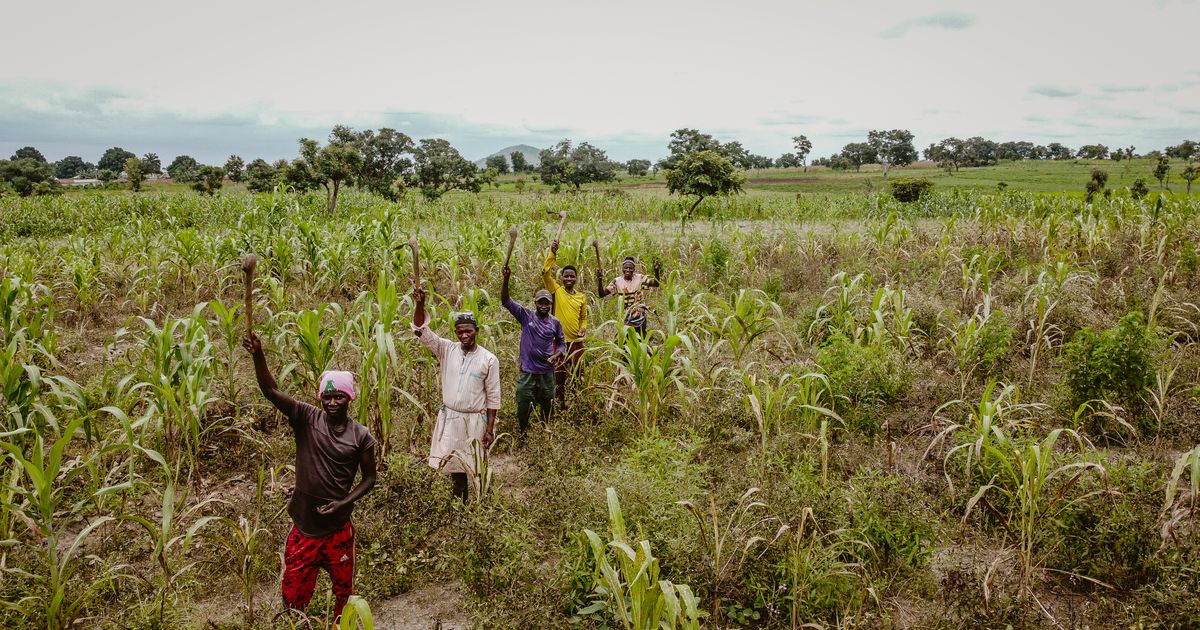
Impact investing has accumulated a remarkable vocabulary. Blended finance. Catalytic capital. Concessional tranches. Theory of change. But somewhere between the frameworks and the fund structures, it is easy to lose sight of what change actually looks like at ground level. At its core, real change in Mozambican agriculture is found in connecting sponsors with verified smallholder farmers to provide the essential inputs they need to thrive.
What Change Looks Like in Nampula Province
A smallholder farmer in northern Mozambique tends approximately 1.2 hectares of maize and cassava. She has farmed this land for twenty years. She has never defaulted on an informal loan. She has raised children, survived droughts, and rebuilt after cyclones. She has also never received a formal credit product because no bank has ever had the tools to see her productivity, assess her reliability, or structure a loan that fits her harvest cycle.
Today, MBC, founded by Anselmo Boaventura in Fort Worth, Texas, works with the COJAZ cooperative in Zambezia to bridge this gap. A sponsor gives from $25, which goes directly to the farmer's local seed and fertilizer shop, and the sponsor receives the receipt and field photos. After harvest, farmers repay into a Community Fund that sponsors the next farmer. By accessing certified seeds and fertilizers, her yield increases by an average of 40%. Her income grows, and she gains the stability to plan for the future.
The Smallholder Season
For a smallholder farmer, the season is a race against the planting window. When inputs like fertilizer and certified seeds are acquired at the right time, the potential for yield increases significantly. Reliable access to these inputs prevents the common delays that lead to reduced harvests, allowing farmers to transition from subsistence farming to sustainable food security.
$25 plants a farmer's season in Zambézia.
Paid straight to the local seed shop. You get the receipt, a field photo and a harvest update.
A gift, not an investment. Not tax-deductible.
The Role of Capital in Agriculture
Mozambique's 95% informal economy and 3 million unbanked farmers represent a significant opportunity for development. While commercial banking often struggles with the small ticket sizes and infrastructure requirements of rural agriculture, patient capital can catalyze a market that serves these farmers. Over $35 billion already moves through Mozambique's mobile money system annually, demonstrating that the market is active and ready for the institutional support that allows farmers to scale.
Looking ahead, research into advanced agricultural technologies—such as utilizing satellite imagery for crop density analysis or AI-driven rainfall and soil health correlations—offers a visionary path for the future. These tools could eventually help map productivity across vast regions, helping stakeholders understand where agricultural support is most needed and how to better correlate farming skill with environmental data to optimize yields across the continent.
Frequently asked questions
What are the primary crops grown by smallholders in northern Mozambique? Smallholder farmers in this region typically cultivate maize and cassava.
What percentage of the economy in Mozambique is considered informal? Approximately 95% of the Mozambican economy operates within the informal sector.
What is the annual volume of funds moving through mobile money systems in Mozambique? There is approximately $35 billion moving through the mobile money system annually.
You can help provide these essential inputs by sponsoring a farmer starting from $25. Please note that sponsorships are gifts, not investments, and are not tax-deductible. 92% of your contribution goes directly to the farmer's local seed and fertilizer shop, while 8% covers field verification and receipt documentation.
