
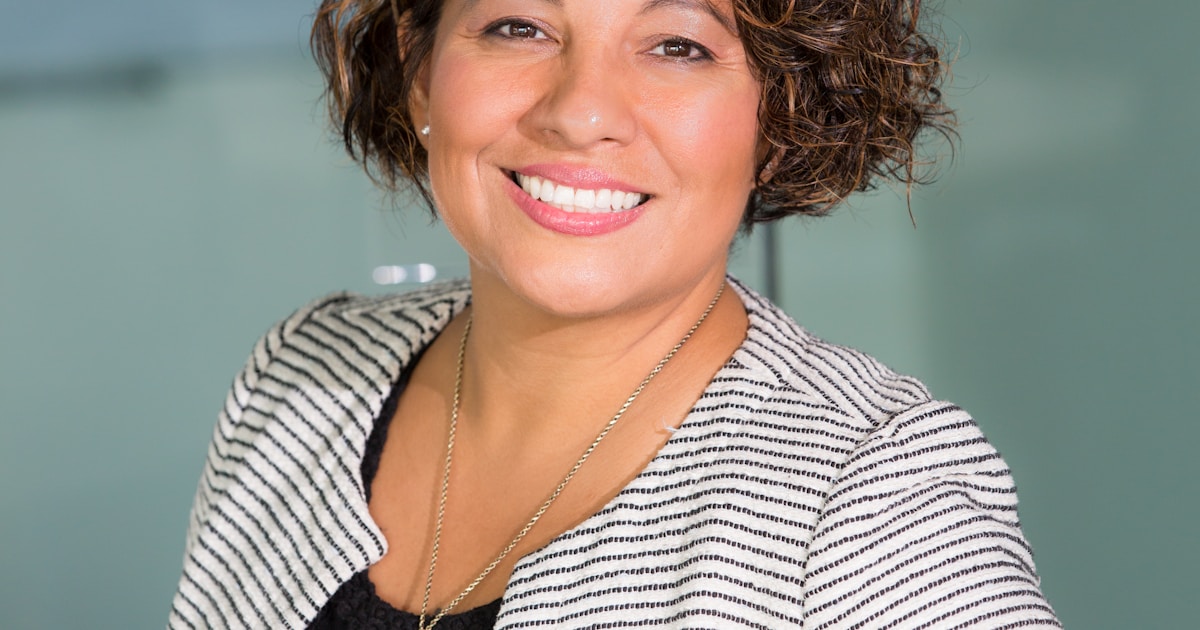
Adelina has farmed the same 2 hectares in Monapo, Nampula, for 22 years. Her grandmother farmed it before her, and her mother before that. Three generations of women have tilled the same red clay soil, growing cassava, maize, and peanuts to sustain their family and contribute to the local economy.
However, Adelina does not technically own this land. She lacks a DUAT (Direito de Uso e Aproveitamento da Terra) document, which serves as the formal title in Mozambique. On paper, the land is often attributed to a "community" entity that rarely functions as a formal administrative body, leaving individual farmers without legal proof of their tenure.
To a formal bank, Adelina's 2 hectares of productive farmland are considered to have zero financial value. Because the land cannot be used as collateral or formally valued, it remains outside the scope of the modern financial system. This is the landless farmer paradox, affecting roughly 2.85 million of Mozambique's 3 million smallholder farmers.
What Is a DUAT?
The DUAT is the legal instrument for land use rights in Mozambique. Established by the 1997 Land Law, it provides a framework for land governance in the country:
- It protects customary land rights of both communities and individuals.
- It acts as a safeguard against arbitrary eviction by state actors or outside entities.
- It facilitates a system where communities can manage land usage collectively.
What DUAT Gives You
- ✅ Legal recognition of the right to occupy and use land.
- ✅ The right to farm, build infrastructure, and harvest crops.
- ✅ Protection against displacement from established plots.
- ✅ The right to pass land to heirs under customary laws.
What DUAT Doesn't Give You
- ❌ The right to sell the land on an open market.
- ❌ The ability to use the land as collateral for a bank loan.
- ❌ A truly individual title, as most are granted at the community level.
- ❌ The right to formally subdivide or lease the land to others.
- ❌ Transferable financial value that can be leveraged.
The DUAT Registration Gap
| Metric | Value |
|---|---|
| Total farmers in Mozambique | ~3 million |
| Farmers who have customary land rights (de facto) | ~2.9 million |
| Farmers with formal DUAT registration (de jure) | ~150,000 (5%) |
| Farmers with DUAT that could serve as financial identity | ~0 |
| Cost to register a DUAT | $30-50 (government fees + transport) |
| Time to register | 3-12 months (if local office is functioning) |
Currently, 95% of Mozambican farmers possess land they have worked for decades, yet they lack documentation proving it. Without this paper trail, they remain landless in the eyes of the formal economy, despite their deep roots in the agricultural sector.
The Cost of Being Undocumented
Cost 1: No Credit
Banks typically require collateral to issue loans. While land is the most common collateral worldwide, Mozambican DUAT land cannot be used this way. It cannot be seized, it lacks a registered market value, and it is not easily transferred to a lender. Consequently, producers like Adelina cannot access the credit needed for inputs, despite the significant value of their annual harvests. You can learn more about how we work to support farmers by sponsoring a farmer in Mozambique.
Cost 2: Land Insecurity
Without a DUAT document, a farmer is vulnerable to displacement. If a commercial investor is granted a government land concession, a farmer without documentation has no legal standing to challenge the overlap. Many farmers lose their livelihoods because they cannot prove their decades of occupancy, as highlighted in our farmers stories.
Cost 3: No Investment
When land security is missing, farmers are hesitant to invest in long-term improvements. Practices like terracing, irrigation systems, or planting high-value trees require years of stability to realize a return. Without the assurance that they will still hold the land in five or ten years, farmers prioritize short-term survival over long-term soil health or yield growth.
Cost 4: No Market Participation
Without a formal DUAT, a farmer cannot sell their land if they need to relocate, lease it to others, or ensure secure inheritance for their children. The land becomes what economists call "dead capital"—it is productive for basic survival, but it cannot be used to generate wealth, scale a business, or secure a family's financial future.
$25 plants a farmer's season in Zambézia.
Paid straight to the local seed shop. You get the receipt, a field photo and a harvest update.
A gift, not an investment. Not tax-deductible.
The Women's Land Gap
Adelina's situation is compounded by gender. In Mozambique:
| Metric | Men | Women |
|---|---|---|
| % who hold DUAT in their name | 85% of registered DUATs | 15% |
| % who inherited land | 60% (patrilineal) | 40% (matrilineal, limited) |
| Access to credit | 10% | 2% |
| Land decision-making power | Primary | Often secondary |
| Risk of losing land if widowed | Low | High |
In matrilineal communities (northern Mozambique), women traditionally control land. But the DUAT registration process — requiring government office visits, Portuguese literacy, and fees — overwhelmingly registers men. Customary women's rights are being erased by formal men's documents.
The Solution: Documented, Digital, Datable
Step 1: Document the DUAT
Every farmer's land should be GPS-mapped and registered. A field agent with a smartphone can:
- Walk the field boundary (GPS tracking, 30 minutes)
- Scan the farmer's BI (identity verification)
- Cross-reference with satellite imagery (boundary verification)
- Submit to the local land office for formal DUAT registration
Cost: $30-50 per farmer Time: 1-2 hours per farm (field work) + 3-6 months (government processing)
Step 2: Digitize the DUAT
Once registered, the DUAT should be digitized:
- Stored in a blockchain land registry (immutable, transparent)
- Linked to the farmer's M-Pesa account
- Cross-referenced with satellite NDVI data (proving the land is productive)
- Accessible via mobile phone (SMS verification)
Cost: $10 million to build the platform (for all of Mozambique)
Step 3: Make DUAT Financially Useful
The DUAT alone can't be collateral. But combined with satellite data, it becomes a productive asset verification:
- DUAT proves: "This farmer has legal right to use this land"
- Satellite NDVI proves: "This land is productive"
- M-Pesa history proves: "This farmer earns income from this land"
- Together: Creditworthy borrower — no collateral seizure needed
Maputo Bridge Capital, founded by Anselmo Boaventura in Fort Worth, Texas, focuses on connecting sponsors with verified smallholder farmers in Mozambique, including partners at the COJAZ cooperative in Zambezia, to foster direct support systems that bypass traditional banking barriers.
What Philanthropy Can Do
Fund Mass DUAT Registration
A philanthropic initiative of $90-150 million could register DUATs for all 3 million Mozambican farmers:
- 3 million farmers GPS-mapped
- 3 million land boundaries verified by satellite
- 3 million digital identities created
Fund Women's DUAT Registration
A targeted $25 million program to register women as co-titleholders would:
- Give 1.5 million women legal land rights
- Increase women's credit access 10x
- Reduce domestic violence (evidence-based correlation)
- Improve child nutrition (women invest 90% of income in family)
Fund Land Dispute Resolution
A $20 million program to train community land committees would:
- Resolve 80% of land disputes locally
- Reduce court cases (which take 3-5 years)
- Build community trust
- Protect against land grabbing
The Landless Farmer's Plea
Adelina doesn't want charity. She doesn't want food aid. She doesn't want free seeds. She wants a piece of paper.
A DUAT document that says: "This land belongs to Adelina. She has farmed it for 22 years. She has the right to use it. And this right is recognized by the government, by the bank, and by the law."
That piece of paper costs $30. It can help formalize her standing, which is essential to securing a future. With proper recognition, smallholder farmers can better plan for school fees, healthcare, and infrastructure.
A Smallholder Farmer's Season
For a smallholder farmer, formalizing land rights ensures stability throughout the season. When a farmer has documented proof of their land, they are better positioned to focus on the essential cycles of clearing, planting, and harvesting without the persistent fear of displacement, allowing them to invest their limited resources back into their soil for better yields.
Frequently asked questions
Q: What is a DUAT in Mozambique? A: A DUAT (Direito de Uso e Aproveitamento da Terra) is the formal government document that grants a citizen the legal right to use and benefit from a specific piece of land.
Q: Why does the registration of land disproportionately favor men? A: The registration process often requires significant administrative navigation, including visiting government offices and possessing Portuguese literacy, which has historically excluded many women from having their names on formal land titles.
Q: Can satellite technology assist in land verification? A: Yes, satellite NDVI data can monitor agricultural productivity and verify land boundaries, providing a digital layer of evidence that complements formal legal documentation.
Maputo Bridge Capital helps connect sponsors with verified smallholder farmers like those in the COJAZ cooperative. A sponsor gives from $25, which goes directly to the farmer's local seed and fertilizer shop, and in return, the sponsor receives the receipt and field photos. Please note that sponsorships are gifts, not investments, and are not tax-deductible. To support a farmer, visit https://maputobridgecapital.com/sponsor-a-farmer-mozambique.