
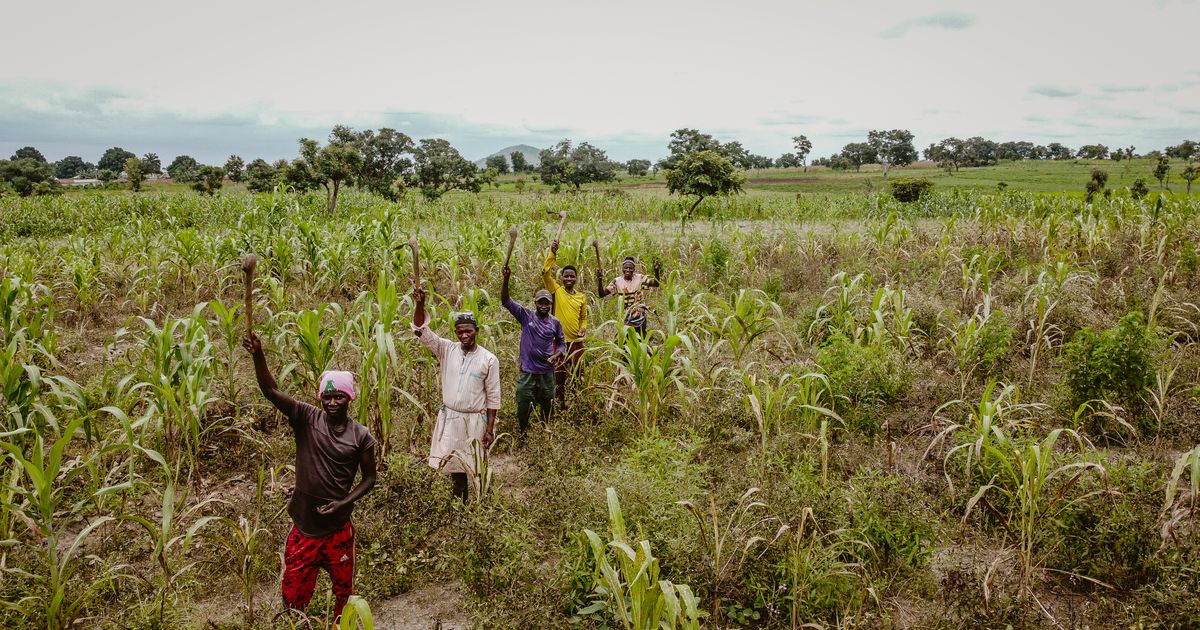
The moral calculus of investing in Africa's poorest farmers is defined by the choice to bridge the gap between global capital and those left behind by formal systems. By supporting smallholder farmers in Mozambique, sponsors bypass traditional barriers to ensure that resources reach the individuals actually working the land.
The Weight of Undeployed Capital
Mozambique's agricultural sector represents one of the most acute cases of capital market failure in the developing world. Consider these figures: 36 million hectares of productive land are available, with 81% of the population engaged in farming. A digital payments infrastructure carries $35 billion in annual mobile money volume. Yet, there remain 3 million farmers who cannot access a single dollar of formal credit.
The barriers are structural, built by institutions that optimized for customers easiest to serve, leaving the majority in a 95% informal economy with no path to formalization. This is not a story about individuals who need charity, but about capable producers who need a system that can finally see them.
Technology and the Smallholder Season
For a smallholder farmer in Zambezia, the agricultural season is a race against time and resource scarcity. The lack of certified seeds and fertilizers often forces them to plant less than their land could support, capping their yield potential. Future agricultural innovation, such as satellite credit scoring systems, could eventually visualize land productivity from space and build digital agronomic profiles. While these technologies represent exciting research directions for the future of the sector, today’s reality for a farmer is bolstered by direct support that allows them to access local inputs. By ensuring that capital reaches local shops, we provide the stability necessary to secure a successful harvest.
$25 plants a farmer's season in Zambézia.
Paid straight to the local seed shop. You get the receipt, a field photo and a harvest update.
A gift, not an investment. Not tax-deductible.
The Moral Dimension We Can No Longer Avoid
Maputo Bridge Capital (MBC), founded by Anselmo Boaventura in Fort Worth, Texas, works to solve this by connecting sponsors with verified smallholder farmers in the COJAZ cooperative in Zambezia. A sponsor gives from $25, with 92% of that gift going directly to the farmer's local seed and fertilizer shop, while 8% covers vital field verification and receipt documentation. The sponsor receives documentation and field photos, witnessing the direct impact of their support.
These sponsorships are gifts, not investments, and are not tax-deductible. Following the harvest, farmers repay into a Community Fund that sponsors the next farmer, creating a cycle of growth. Technology remains a beacon for what could be built, but the moral calculus today is clear: the farmers are ready and the capital can be deployed effectively. You can learn more about how sponsoring a farmer works or meet the farmers who benefit from this support.
Frequently asked questions
What characterizes a capital market failure? A capital market failure occurs when vast resources exist but cannot reach capable participants, such as the 3 million farmers in Mozambique lacking access to credit.
Why is the informal economy a challenge for agriculture? Because 95% of the economy remains informal, farmers lack the traditional financial records required by large institutions to secure funding, keeping them invisible to the system.
How does mobile money impact local agriculture? Mobile money infrastructure enables rapid transfer of funds and documentation, which is essential for scaling support to rural areas that lack physical banking infrastructure.
To begin making a difference, you can sponsor a farmer from $25 through Maputo Bridge Capital. Please note that all sponsorships are gifts, not investments.

