
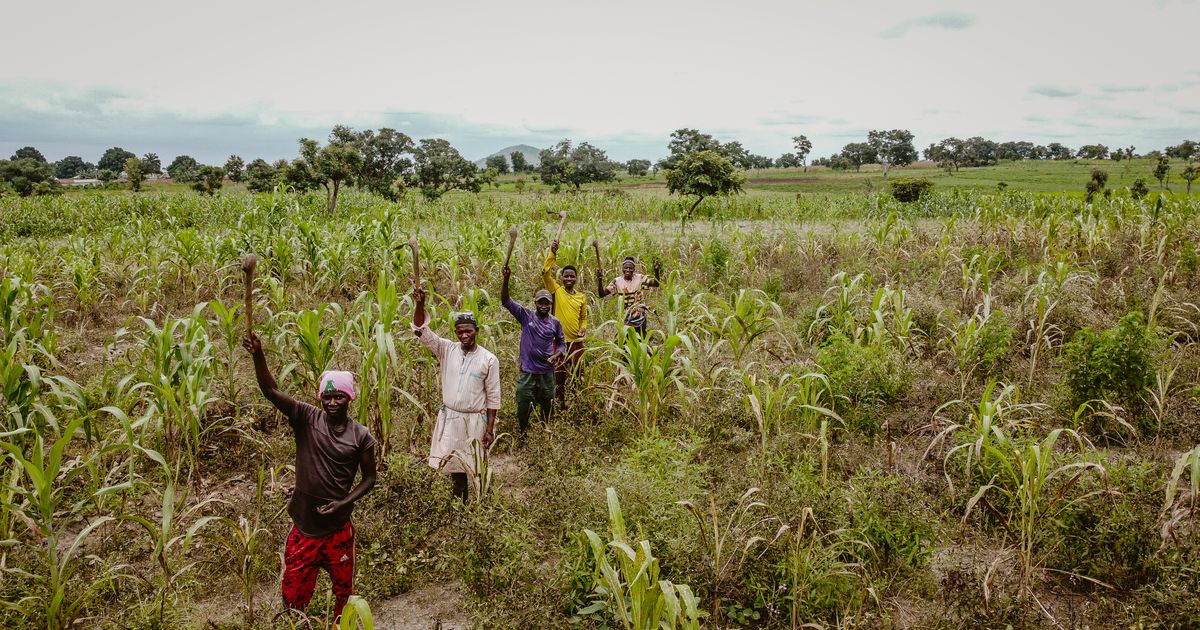
2026 is recognized as the International Year of the Woman Farmer. Women produce 70% of Mozambique's agricultural output but own only 20% of the land, making them the essential backbone of local food security while simultaneously facing the highest barriers to credit, land rights, market access, and technical resources. Maputo Bridge Capital (MBC), founded by Anselmo Boaventura in Fort Worth, Texas, works to bridge these gaps by connecting sponsors with verified smallholder farmers in Mozambique, specifically through our partnership with the COJAZ cooperative in Zambezia.
Women in Mozambican Agriculture by the Numbers
| Metric | Value |
|---|---|
| Women's share of agricultural labor | ~70% |
| Women's land ownership | ~20% |
| Women with access to formal credit | <10% |
| Women with mobile money accounts | Growing (M-Pesa) |
| Primary food producers | Women |
| Decision-making power over income | Limited |
| International Year of the Woman Farmer | 2026 |
The Gender Gap
Land Rights
- DUAT land rights are predominantly registered to men.
- Customary land practices often favor male inheritance.
- Women frequently farm land they do not formally control.
- Without official land title, women often find it impossible to access traditional bank loans.
Access to Credit
- Traditional banks typically require collateral like land or property, which women rarely own.
- While microfinance reaches some demographics, overall coverage remains limited.
- Mobile money platforms like M-Pesa have become vital, as they are increasingly accessible to rural women.
Market Access
- Women typically sell their harvests at local markets where prices are lower and information is limited.
- Men are historically more likely to have the mobility required to transport goods to higher-value regional markets.
- Women often lack the necessary transport tools, such as motorbikes, which restricts their geographic reach.
Technology Access
- Women generally report lower mobile phone ownership rates compared to men.
- Smartphones remain less common among the rural female population.
- Significant digital literacy gaps persist in many agrarian communities.
Education and Skills
- Girls often drop out of formal schooling at higher rates than boys.
- Agricultural extension services are statistically more likely to reach men than women.
- Many training programs are scheduled at times when women are busy with domestic or farm responsibilities.
2026: International Year of the Woman Farmer
Organizations like TechnoServe are using 2026 to highlight the critical role women farmers play in food security and broader economic development. You can learn more about the broader landscape of Mozambican agriculture in the Mozambique Business Guide 2026: $5.88B FDI, EU Forum, 10-Year Agriculture Plan or review current Mozambique Trade Data 2026: $8.3B Exports, $10.1B Imports, AGOA Access.
Women's Leadership in Agri-Food Systems
- Promoting formal leadership roles for women within cooperatives.
- Ensuring women's voices are heard in agricultural policy development.
- Increasing the number of female extension agents and professional agronomists.
- Supporting dedicated women's producer organizations.
Strengthening Access to Markets, Finance, and Technology
- Expanding mobile money onboarding initiatives specifically for women.
- Providing targeted digital literacy and technical training.
- Developing market access platforms that reduce the need for long-distance travel.
- Creating credit scoring models that do not rely on traditional land collateral.
Key Organizations Working on Women in Mozambican Agriculture
- TechnoServe — International Year of the Woman Farmer programs.
- Women's World Banking — Digital finance initiatives for women.
- FSD Mozambique — Financial sector development focused on women.
- AfDB — Rural women's agricultural productivity projects in Manica and Sofala.
- FAO — Gender strategy for agriculture.
- CGIAR — Climate-resilient bean and insect sectors with a gender-specific focus.
The Nature of the Harvest
Agriculture as the engine of wealth: ten great books on farming, land, seed, water, risk and innovation, and who funds agriculture in Mozambique.
PDF ebook, instant download. $5 of every copy buys seed for a farmer.
MBC's Women-Centered Approach
Maputo Bridge Capital, founded by Anselmo Boaventura in Fort Worth, Texas, works with the COJAZ cooperative in Zambezia to support smallholder farmers. The platform is designed to overcome the specific barriers women face in agriculture:
Credit Without Land Title
MBC’s verification process uses:
- Satellite NDVI data to track actual crop health rather than relying on land ownership documents.
- M-Pesa transaction history to assess economic activity.
- Agent verification where field teams confirm farmer identity and crop presence.
- Weather data to assess climate risk.
This means a woman farming land she does not formally own can still be verified for participation in agricultural support programs because the satellite confirms her crops are growing.
M-Pesa: Women's Financial Independence
M-Pesa is a powerful tool for women, allowing for:
- Account management without requiring third-party permission.
- Direct control of funds by the account holder.
- Financial transactions that reduce the need to travel to distant bank branches.
- Direct receipt of funds without reliance on intermediaries.
- Safer purchases made through digital tokens rather than carrying physical cash.
Voice Interface for Illiterate Farmers
Research into voice-first interfaces explores how technology could eventually allow women who cannot read to:
- Record questions in Portuguese.
- Access AI-powered voice responses.
- Hear market prices without needing literacy.
- Obtain agricultural advice verbally.
Price Alerts via SMS
Women can receive M-Pesa SMS alerts when commodity prices peak, helping them understand when to sell at the best time without needing to travel to the market just to check prices.
Education Academy
Educational resources cover:
- Farming as a business.
- Marketing and market access.
- Financial management.
- Cooperative formation.
Support Opportunities: Women-Focused
1. Women's Cooperative Development
- Strengthening women-led cooperatives.
- Providing access to processing equipment.
- Connecting producers to export markets.
- Governance training for cooperative members.
2. Female Agent Network
- Recruiting and training female field agents.
- Leveraging the fact that women agents often reach women farmers more effectively.
- Providing performance-based incentives.
- Building trust within local communities.
3. Women's Support Portfolio
- Funding ranges from $100-$5,000 per farmer.
- Verification via satellite data (no land title needed).
- Disbursement and collection via M-Pesa.
- Focus on gender lens support metrics.
4. Mobile Technology for Women
- Research into smartphone distribution for women farmers.
- Digital literacy training programs.
- M-Pesa onboarding campaigns.
- Potential future deployment of voice-based agricultural interfaces.
The Bottom Line
Women produce 70% of Mozambique's food but own 20% of the land and face systemic barriers to markets, technology, and education. 2026 — the International Year of the Woman Farmer — is the moment to emphasize their role in the economy. Supporting these farmers is essential; women often reinvest income into family nutrition, education, and health, creating a multiplier effect for the entire community.
The Farmer's Season
For a smallholder farmer, every season is a cycle of preparation and risk. By utilizing verified agricultural support, farmers gain access to the seeds and fertilizers necessary at the start of the season. After the harvest, the farmers repay into a Community Fund, which ensures that resources are available for the next farmer to begin their own cycle, creating a sustainable loop of support within cooperatives like COJAZ.
Frequently asked questions
Q: What percentage of food in Mozambique is produced by women?
A: Women are responsible for producing 70% of the country's food supply.
Q: Why is land ownership a barrier for female farmers?
A: Because women often own only 20% of the land, they frequently lack the formal titles required for traditional credit applications.
Q: How does technology like mobile money assist in rural areas?
A: It allows for direct financial control, reduces the safety risks of carrying cash, and eliminates the need for travel to physical bank branches.