
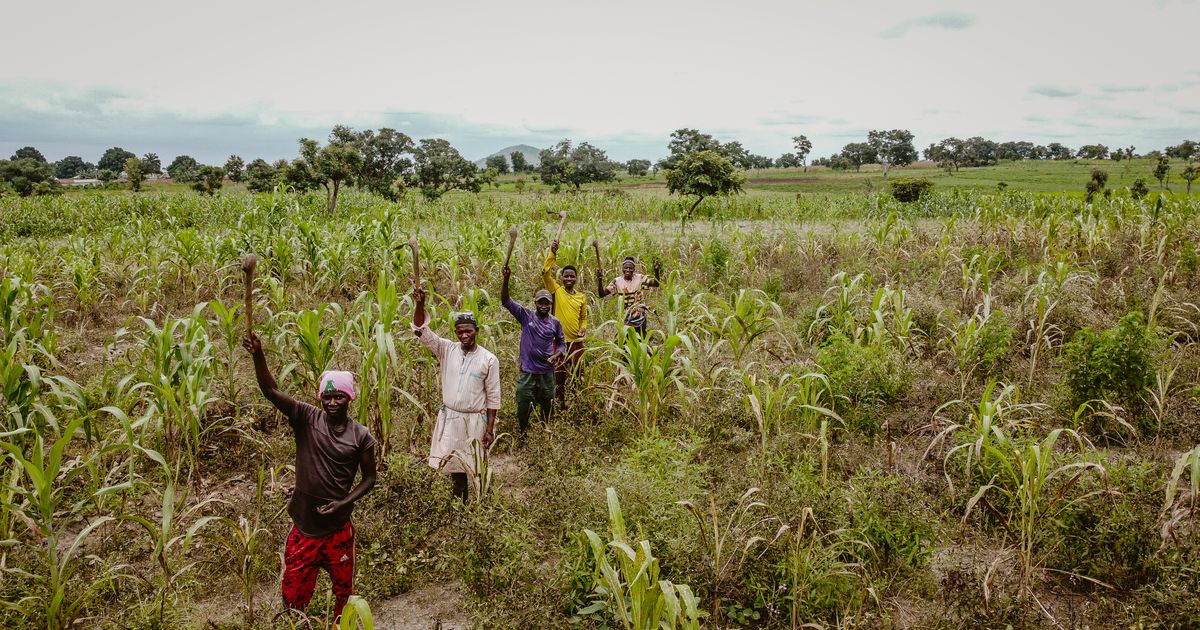
Mozambique Youth Employment: Agriculture Jobs, Skills Gap, Solutions
Nearly two-thirds of Mozambique's youth say they are not employed and are looking for work, creating an urgent need for sustainable employment pathways. By leveraging the vast potential of the agricultural sector, Mozambique can transform its demographic dividend—with 50.4% of the population under 25—into a robust engine for economic growth and stability.
The Youth Employment Crisis
By the Numbers
| Metric | Value |
|---|---|
| Youth unemployment | ~65% looking for work |
| Population under 25 | 50.4% |
| Youth in agriculture (Africa) | 47% (~143 million) |
| Employment in agriculture (Moz) | ~80% of workforce |
| IMF job creation rate | 1/4 of comparator countries |
| Key barrier | Lack of training and work experience |
| Nacala Corridor jobs | Growing (agriculture, logistics) |
The Afrobarometer Finding
Nearly two-thirds of Mozambican youth say they are not employed and are looking for work. They cite several systemic challenges:
- Lack of training: There is a persistent skills gap between formal education and actual job requirements.
- Lack of work experience: Many youth struggle with the paradox of needing experience to land a first job.
- Limited opportunities: Rural areas, in particular, lack the infrastructure to support modern career development.
- Agriculture seen as failure: Many youth aspire to urban positions, mistakenly viewing farming as a path of poverty rather than a professional career.
The IMF Jobs Problem
Recent data from the IMF highlights that Mozambique generates only one-fourth as many jobs per unit of per capita GDP growth compared to peer nations. While the country continues to experience economic growth, that progress is currently failing to translate into meaningful employment, leaving a massive portion of the youth demographic behind.
Why Agriculture Is the Answer
Scale
- 80% of Mozambicans work in agriculture, establishing it as the nation's primary social safety net.
- 36 million hectares of arable land provide a massive foundation for expansion.
- Agriculture currently employs more people than any other sector in the country.
- Historical models suggest that for every $1M invested in agriculture, approximately 47 jobs are created.
The Perception Problem
Many youth currently view agriculture through an outdated lens as backbreaking manual labor. However, the future of the sector relies on shifting this perspective toward the reality of modern agriculture, which is increasingly:
- Technology-driven: Incorporating satellites, drones, IoT, and advanced data analytics.
- Entrepreneurial: Treating the farm as a sustainable business rather than a subsistence activity.
- Lucrative: Focusing on agri-processing, regional exports, and significant value addition.
- Innovative: Utilizing fintech and climate-smart solutions to manage production risks.
Skills Gap Analysis
What Youth Lack
- Technical agricultural skills: Including advanced crop management, irrigation techniques, and processing.
- Business skills: Essential competencies in financial management, market pricing, and record-keeping.
- Digital literacy: Proficiency with mobile applications, digital payment systems, and data-driven analysis.
- Work experience: A lack of practical exposure to the demands of commercial-scale farming.
- Entrepreneurship skills: The foundational knowledge required to build and scale an agribusiness.
What Education Provides
- Primary enrollment: 99%, though less than half of students successfully complete the cycle.
- Secondary enrollment: Remains low, which creates significant hurdles, especially in rural provinces.
- University access: Remains highly concentrated in urban centers, limiting rural reach.
- Skills mismatch: The gap between current education curricula and market needs is estimated at approximately 10%.
Solutions: Making Agriculture Attractive for Youth
Youth don't want to be subsistence farmers — they want to be entrepreneurs, and the following areas offer pathways for growth:
- Input supply businesses — Managing distribution for seeds, fertilizer, and equipment.
- Processing enterprises — Adding value through cashew processing, cassava flour production, or fruit drying.
- Service businesses — Providing essential services like tractor hiring, professional spraying, and transport.
- Digital agriculture — Developing apps, providing data services, and utilizing drone piloting for field management.
- Market linkage — Connecting farmers to larger markets through trading, aggregation, and export facilitation.
Skills Development Programs
- Agricultural Training — Various initiatives provide free courses accessible via mobile devices for rural populations.
- SNV Opportunities for Youth Employment (OYE) — An impactful program operating across Mozambique, Rwanda, and Tanzania.
- CIP potato/soybean project — Driving employment and technical skills for hundreds of young people.
- Helvetas — Focused on developing work-life skills throughout the Nacala Corridor.
- TechnoServe — Providing robust youth agribusiness programs to build professional capacity.
Technology Makes Agriculture Cool
Advanced technology stacks make the sector attractive to tech-savvy youth by offering modern tools for traditional work:
- 🛰️ Satellite NDVI monitoring for crop health (space technology).
- 📱 M-Pesa fintech infrastructure facilitating mobile money transactions.
- 🤖 AI-driven price prediction models to inform market decisions.
- 🚁 Drone surveys utilizing UAV technology for precision mapping.
- 📡 IoT sensors connecting devices to the Internet of Things.
- 🗣️ Voice interface capabilities via AI and NLP.
- 🌱 Carbon credits supported by climate technology innovations.
Access to Finance
Youth often lack collateral for traditional bank loans, so alternative models are necessary:
- No land title required by utilizing satellite credit scoring.
- No bank account needed when using M-Pesa mobile money.
- No credit history required through the use of alternative data.
- $100 minimum threshold to make capital accessible.
- Agent verification to build trust without heavy paperwork.
Nacala Corridor Opportunities
New job opportunities are being created around the Nacala Corridor — a strategic railroad line running through southeast Africa, including roles in:
- Logistics and transport operations.
- Agricultural processing facilities.
- Mining services support.
- Construction projects.
- Regional and international trade.
The Nature of Wealth
How Asia climbed from poverty to wealth in one lifetime, what more than fifty thinkers teach, and a four-stage plan for Mozambique through agriculture and markets.
PDF ebook, instant download. $5 of every copy buys seed for a farmer.
The 47 Jobs per $1M Opportunity
Research shows every $1 million invested in agriculture creates approximately 47 jobs — more than any other sector. Compare the job creation potential:
- Agriculture: 47 jobs per $1M
- Manufacturing: 20-30 jobs per $1M
- Mining: 5-10 jobs per $1M
- Oil & gas: 2-5 jobs per $1M
For a country with 65% youth unemployment, agriculture remains the most efficient job creation engine available to scale national productivity.
Youth Employment Initiatives
Agent Networks
- Recruiting young people as field agents to bridge the gap between technology and the field.
- Performance-based commission structures managed via M-Pesa.
- Skills developed include KYC verification, GPS mapping, and crop assessment.
- Income potential of $50-200/month, which is significant in rural areas.
Education and Training
- Accessing courses on farming as a business, marketing, agritech, and cooperative management.
- Mobile-accessible delivery platforms that provide certificates upon completion.
- Creating a clear pathway to employment or independent entrepreneurship.
Technology Roles
- Drone pilots for agricultural surveys and mapping.
- IoT sensor installation and maintenance experts.
- Data analysis roles (interpreting NDVI, weather, and commodity prices).
- App development and technical support roles.
- Customer service positions leveraging bilingual AI tools.
Marketplace Entrepreneurship
Youth can start businesses in several key categories:
- Aggregators: Buying from farmers and selling to larger buyers.
- Transport providers: Utilizing cargo matching platforms to optimize logistics.
- Input suppliers: Managing the supply of seeds, fertilizer, and storage bags.
- Processing enterprises: Operating milling, drying, and packaging equipment.
Support Opportunities: Youth-Focused
1. Youth Agribusiness Incubator
- Training, mentoring, and support for startup capital.
- Managing 50-100 youth per cohort.
- Focus on agribusiness entrepreneurship as a career path.
- Leveraging digital platforms as a technology layer for the incubator.
2. Agent Network Expansion
- Recruiting and training young agents for field operations.
- Equipping agents with smartphones and mobile money accounts.
- Utilizing performance-based compensation models.
- Serving a dual purpose of gainful employment and professional farmer verification.
3. Digital Skills Training
- Mobile literacy programs for rural youth.
- Agricultural app training to improve farm management.
- Drone piloting certification courses.
- Data analysis skills to improve market outcomes.
- M-Pesa merchant onboarding for local businesses.
4. Youth Financial Support
- Micro-funding for young agripreneurs to get established.
- $100-$5,000 range per youth to scale operations.
- Utilizing satellite credit scoring to remove the need for collateral.
- M-Pesa disbursement for speed and security.
- Integrating business mentoring alongside financial support.
The Bottom Line
Mozambique's 65% youth unemployment is a crisis—but it's also the largest untapped workforce in Southern Africa. With 50.4% of the population under 25, Mozambique has a demographic dividend that could drive decades of growth or, if left unaddressed, become a significant social challenge.
Agriculture remains the answer for sustainable employment, as it is the largest sector by labor participation and is increasingly becoming technology-driven. Research into satellite monitoring, mobile money systems like M-Pesa, drone surveys, and AI-powered price prediction represents a vision for what could be built to make modern agriculture more attractive to tech-savvy youth. By integrating digital skills and specialized training, the sector can transform from traditional subsistence to a dynamic economic engine.
The choice for stakeholders is simple: prioritize support for youth agriculture or risk losing the potential of an entire generation. By focusing on training, technology, and finance, the goal is to turn high unemployment rates into opportunities for sustainable livelihoods across rural regions.
Impact on the Smallholder Farmer's Season
For a smallholder farmer, these advancements mean the difference between a successful harvest and a struggle to survive. By connecting sponsors with farmers through the COJAZ cooperative in Zambezia, Maputo Bridge Capital ensures that resources reach the farmer's local seed and fertilizer shop directly. This timely access to essential inputs at the start of the season allows farmers to plant effectively, while receipt documentation and field photos provide transparency and accountability throughout the growing cycle.
Frequently asked questions
What demographic makes up most of Mozambique's population?
Over 50% of the population in Mozambique is under the age of 25.
Why is agriculture considered vital for youth employment?
Agriculture is the largest sector for employment in the country and serves as a major driver for economic growth.
What role does technology play in modern agricultural development?
Technologies like satellite monitoring, drones, and AI price prediction help modernize farming practices, improve output, and attract younger workers to the industry.
You can help bridge the gap for a smallholder farmer in Mozambique by providing a sponsorship starting from $25. Your contribution directly supports a farmer through the COJAZ cooperative, ensuring they have the tools for a productive season. Please visit /sponsor-a-farmer-mozambique to learn more. Please note that sponsorships are gifts to support farmers, not investments, and are not tax-deductible.