
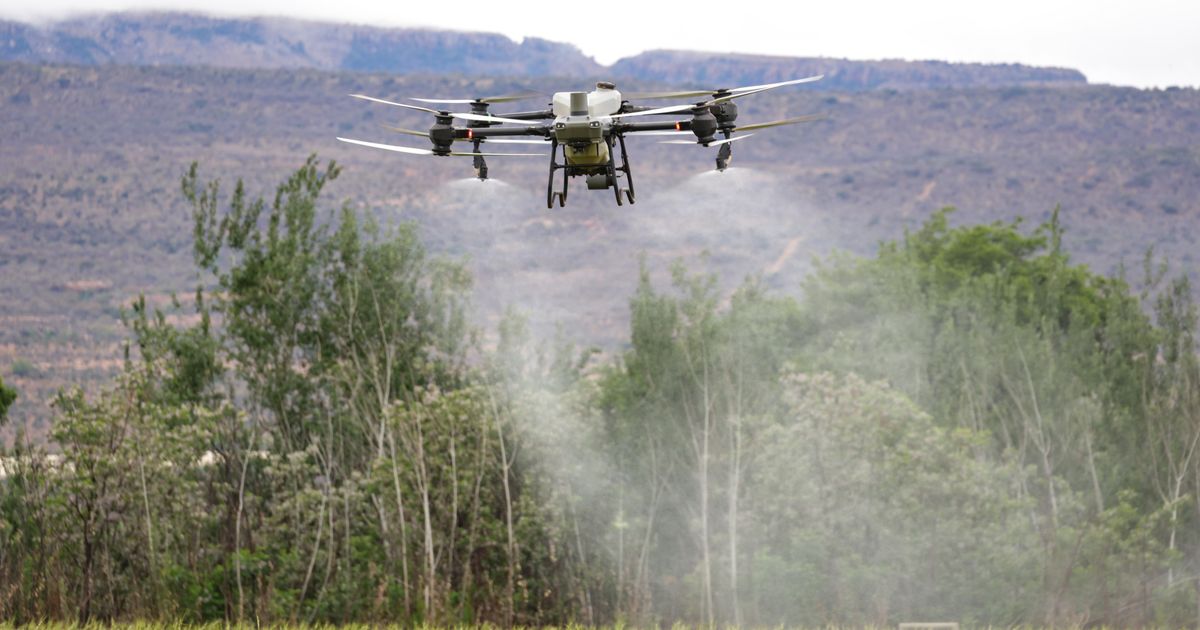
Japan's Agricultural Tech Revolution
Japan has one of the most technologically advanced agricultural sectors in the world, setting a benchmark for global efficiency. Despite having significantly less arable land than Mozambique, Japan produces far greater value per hectare through the implementation of smart farming technologies like IoT, drones, and AI. While Maputo Bridge Capital (MBC) currently connects sponsors with smallholder farmers in Mozambique to support essential seed and fertilizer purchases, the Japanese model offers a vision for the future of the industry.
Japan vs Mozambique
| Metric | Japan | Mozambique |
|---|---|---|
| Arable land | 4.5M hectares | 36M hectares |
| Population in agriculture | 1.5% | 81% |
| Average farm size | 2.4 ha | 1.2 ha |
| Agricultural GDP per ha | $15,000+ | $200-400 |
| Tech adoption | High (IoT, drones, AI) | Low (mostly manual) |
| Farmer average age | 68 years | 35 years |
| Robot farm workers | 5,000+ | 0 |
| Drone-sprayed area | 30% of rice fields | 0% |
Japan has 8x less land but produces 37x more value per hectare. Technology is the key driver of this disparity. For a deeper look at how these innovations, such as satellites and AI, can be applied to build a robust distribution system in Mozambique, you can read our insights in How Agritech Builds Mozambique's Distribution System (Part 1) and How Agritech Builds Mozambique's Distribution System (Part 2). These technological concepts, including IoT and digital farmer IDs, represent future research directions for enhancing agricultural productivity.
10 Japanese Smart Farming Technologies for Mozambique
1. IoT Soil Sensors
| Feature | Japan | Application for Mozambique |
|---|---|---|
| What it measures | Soil moisture, temperature, pH, EC | Same — soil is soil everywhere |
| Cost per sensor | $30-100 | Same (prices falling) |
| Data transmission | LoRaWAN (low power, long range) | Rural areas have GSM/LoRaWAN |
| Battery life | 2-3 years (solar) | Same |
| Impact | 20-30% water savings | Critical for drought-prone MZ |
2. Drone Crop Spraying
| Feature | Japan | Mozambique Application |
|---|---|---|
| Drone type | Yamaha RMAX (helicopter) | DJI Agras (cheaper, $5-15K) |
| Spray rate | 2 hectares in 10 minutes | 50x faster than manual backpack |
| Pesticide savings | 30-50% less chemical used | Lower costs, less environmental damage |
| Cost per hectare | $15-25 | $10-20 (cheaper labor offset) |
| Adoption in Japan | 30% of rice fields sprayed by drone | 0% currently in MZ |
3. AI Crop Disease Detection
| Feature | How It Works | MZ Application |
|---|---|---|
| Smartphone app | Take photo of leaf → AI identifies disease | Works on any smartphone |
| Accuracy | 95%+ for common diseases | Cassava, maize diseases are common |
| Cost | $0 (free apps available) | Farmer uses existing phone |
| Database | Trained on thousands of disease images | MBC can build MZ-specific database |
| Recommendation | Tells farmer which treatment to use | Connects to MBC marketplace for input purchase |
4. Greenhouse Automation
| Feature | Japan | MZ Application |
|---|---|---|
| Climate control | Auto temperature, humidity, CO2 | Vegetables during lean season |
| Hydroponics | Soil-less growing, 90% less water | Urban agriculture, Maputo |
| LED grow lights | Year-round growing, off-grid | Solar + LED = 24/7 growing |
| Yield | 10-20x traditional farming | Transformative for small plots |
| Cost | $500-5,000 per unit | Start small, scale up |
5. Robotic Rice Transplanter
| Feature | Japan | MZ Application |
|---|---|---|
| What it does | Plants rice seedlings automatically | Rice is grown in Zambézia, Sofala |
| Speed | 1 hectare in 2 hours (vs 8 hours manual) | 4x faster planting |
| Cost | $5,000-15,000 (Japanese) | Chinese alternatives $2,000-5,000 |
| Impact | Reduces labor cost by 60% | Critical during labor shortage |
6. Satellite NDVI Monitoring
| Feature | Japan | MZ Application |
|---|---|---|
| What it monitors | Crop health, growth stage, stress | MBC already does this (Sentinel-2) |
| Frequency | Every 5 days | Same |
| Cost | Free (Sentinel-2) | Free |
| Resolution | 10 meters | Adequate for smallholder farms |
| Use | Yield prediction, harvest timing | Credit scoring + logistics planning |
7. Agricultural Weather Stations
| Feature | Japan | MZ Application |
|---|---|---|
| What it measures | Temperature, rainfall, wind, humidity | Same |
| Cost per station | $200-1,000 | Same |
| Coverage | 1 station per 100 ha | Install at MBC collection hubs |
| Benefit | Micro-climate data | Climate adaptation, insurance pricing |
| Integration | Feeds into national weather model | MBC can share with national met service |
8. Automated Sorting and Grading
| Feature | Japan | MZ Application |
|---|---|---|
| What it sorts | Size, color, quality (rice, fruit, vegetables) | Cashew, mango, banana sorting |
| Technology | Computer vision + machine learning | Same technology available |
| Speed | 1,000 kg/hour (vs 50 kg manual) | 20x faster |
| Accuracy | 98%+ | Better than human grading |
| Cost | $2,000-20,000 | Justifiable for export-grade products |
9. Smart Irrigation
| Feature | Japan | MZ Application |
|---|---|---|
| Technology | Soil moisture sensor + weather forecast + auto-valve | Same |
| Water savings | 30-50% vs traditional | Critical for drought areas |
| Cost | $500-2,000/ha | Start with drip + sensor |
| Smartphone control | Open/close valves remotely | Farmer can manage from phone |
| Solar powered | Off-grid operation | Perfect for rural MZ |
10. Agricultural Cooperatives (JA Model)
Japan’s success is built upon the Japan Agricultural (JA) cooperative model. This system supports over 9 million farmers through a vast network of infrastructure, financial services, and shared knowledge. By managing everything from supply procurement to market distribution, the JA model provides the stability necessary for farmers to thrive. Maputo Bridge Capital, founded by Anselmo Boaventura in Fort Worth, Texas, is working to apply these principles in Mozambique. By collaborating with the COJAZ cooperative in Zambezia, MBC aims to replicate this community-focused structure, allowing smallholder farmers to access better inputs and verified market opportunities through collective action.
| Feature | Japan (JA) | MZ Application |
|---|---|---|
| What JA does | Credit, insurance, marketing, inputs, processing | MBC platform does all of this |
| Members | 9 million farmers | MBC targets 1M+ farmers |
| Bank | JA Bank ($600B in deposits) | MBC + M-Pesa for micro-finance |
| Insurance | JA Insurance | MBC weather-indexed insurance |
| Marketing | JA wholesale markets | MBC digital marketplace |
| Education | JA agricultural schools | MBC education platform (13 courses) |
The JA model is the foundation for the vision at Maputo Bridge Capital. By integrating cooperatives, finance, insurance, market access, and education, the goal is to build an ecosystem for Mozambican farmers similar to the JA model in Japan.
The Nature of the Harvest
Agriculture as the engine of wealth: ten great books on farming, land, seed, water, risk and innovation, and who funds agriculture in Mozambique.
PDF ebook, instant download. $5 of every copy buys seed for a farmer.
How to Deploy Japanese Tech in Mozambique
| Technology | Priority | Cost (Pilot) | Impact |
|---|---|---|---|
| AI disease detection app | 1 | $0 (free app) | Immediate farmer benefit |
| IoT soil sensors | 2 | $500 (10 sensors) | Water savings, yield increase |
| Drone spraying service | 3 | $5,000 (1 drone) | Pest control service business |
| Smart irrigation | 4 | $1,000 (1 pilot system) | Double cropping |
| Greenhouse automation | 5 | $2,000 (1 unit) | Off-season vegetables |
| Automated sorting | 6 | $5,000 (1 machine) | Export-grade processing |
| Weather station | 7 | $500 (1 station) | Insurance + forecasting |
| Robot transplanter | 8 | $3,000 (1 unit) | Rice production |
| Total pilot | $14,500 | Full smart farming demo |
A $14,500 budget can deploy all 8 technologies as a pilot. If successful, scaling to 100 villages could reach 50,000 farmers, bringing modern efficiency to traditional practices.
Technology and the Smallholder Farmer's Season
For a smallholder farmer in Mozambique, these technological advancements fundamentally change the growing season. By utilizing satellite NDVI data and AI-driven disease detection, farmers can identify and treat crop issues before they spread, saving harvests. Smart irrigation and weather stations help mitigate the risks of unpredictable rainfall, ensuring that resources are applied exactly when and where they are needed to maximize yield throughout the entire season.
Related guide: Climate-smart agriculture in Mozambique: 6 technologies helping farmers beat drought, floods and cyclones
Frequently asked questions
How do IoT sensors save water in farming? IoT soil sensors monitor moisture levels in real-time, allowing for precision irrigation that ensures crops receive only the water they need, reducing waste by 20-30%.
What role does AI play in crop health? AI-powered smartphone applications can analyze images of plant leaves to identify diseases or nutrient deficiencies with up to 95% accuracy, enabling faster treatment.
Why is an automated sorting system important? Automated sorting uses computer vision to categorize produce by size and quality 20 times faster than manual labor, which is essential for meeting the standards required for export markets.
Maputo Bridge Capital, founded by Anselmo Boaventura in Fort Worth, Texas, connects sponsors with verified smallholder farmers in Mozambique, working directly with the COJAZ cooperative in Zambezia. You can sponsor a farmer from $25 at https://maputobridgecapital.com/sponsor-a-farmer-mozambique. Your gift helps fund the farmer’s local seed and fertilizer shop, and you will receive the receipt and field photos. Please note that sponsorships are gifts, not investments, and are not tax-deductible; 92% of your contribution goes to the farmer, while 8% covers verification and documentation.