
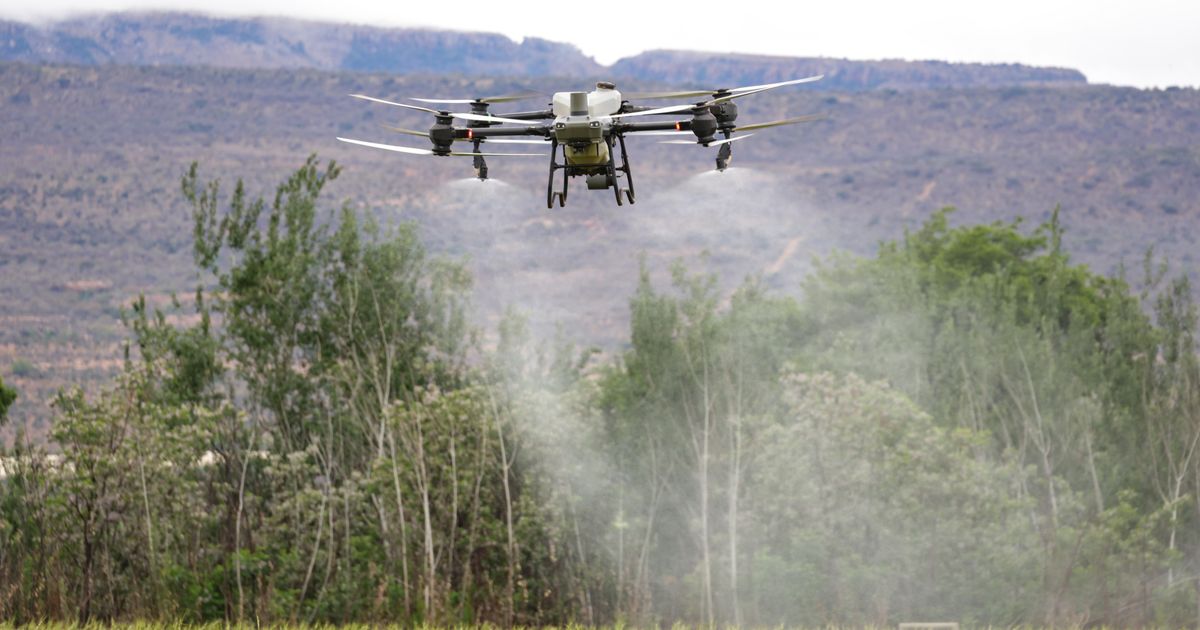
Mozambique Irrigation Investment: From Drought to Year-Round Harvests
Mozambique has 36 million hectares of arable land but irrigates only 3% of it. The country possesses 60 major rivers, 13 international river basins, and receives 800-1,500mm of annual rainfall, yet most farmers remain limited to a single harvest during the rainy season because of a significant lack of irrigation infrastructure.
This article maps Mozambique's irrigation potential, breaks down the requirements for various irrigation technologies, and explains how controlled water access transforms farmer economics from one seasonal harvest to three harvests per year. By leveraging technology and better water management, the path from drought to productive, year-round harvests becomes a reality for many smallholders.
The Irrigation Gap: Mozambique vs the World
| Country | Arable Land (M ha) | Irrigated (%) | Irrigated Area (M ha) |
|---|---|---|---|
| Mozambique | 36 | 3% | 1.08 |
| South Africa | 12.5 | 12% | 1.5 |
| Egypt | 3 | 100% | 3.0 |
| Kenya | 5.4 | 5% | 0.27 |
| Nigeria | 34 | 2% | 0.68 |
| India | 156 | 35% | 54.6 |
Mozambique currently irrigates 3% of its arable land compared to 35% in India. The potential is substantial; if even 10% of Mozambican arable land were irrigated, it would create 3.6 million hectares of year-round productive farmland, drastically improving food security and output.
Mozambique's River Systems: The Water Is There
Major River Basins
Mozambique has 13 major river basins, most of which are shared with neighboring countries. These systems provide the backbone for future development:
- Zambezi River — The largest basin (1.3M km²), flowing through Tete and Zambézia. It offers massive irrigation potential but is currently only 5% developed.
- Limpopo River — Flows through Gaza province and supports the Chókwè Irrigation Scheme (33,000 hectares), the largest in the country.
- Save River — Located in Sofala, it has an irrigation potential of 80,000 hectares, though only 15% is currently developed.
- Rovuma River — Forms the border with Tanzania in Cabo Delgado and Niassa, remaining virtually untapped.
- Incomati River — Located in Maputo province, supporting various small-scale vegetable irrigation schemes.
- Umbelúzi River — Also in Maputo province, it supports essential horticulture for the Maputo market.
- Búzi River — Located in Sofala, home to the Búzi Irrigation Scheme (12,000 hectares).
- Púnguè River — Situated in Sofala and Manica, with an irrigation potential of 40,000 hectares.
- Licungo River — Located in Zambézia, offering irrigation potential of 60,000 hectares.
- Lúrio River — Serving Nampula and Cabo Delgado, with irrigation potential of 30,000 hectares.
Rainfall by Province
| Province | Rainfall (mm/year) | Dry Season (months) | Irrigation Need |
|---|---|---|---|
| Zambézia | 1,200-2,000 | 3-4 | Low — supplementary only |
| Nampula | 800-1,200 | 5-6 | Moderate |
| Niassa | 1,000-1,500 | 4-5 | Low-moderate |
| Cabo Delgado | 800-1,200 | 5-6 | Moderate |
| Sofala | 800-1,200 | 5-6 | Moderate-high |
| Manica | 900-1,400 | 5-6 | Moderate |
| Tete | 500-900 | 7-8 | High — critical |
| Gaza | 400-600 | 8-9 | Very high — essential |
| Inhambane | 600-900 | 7-8 | High — essential |
| Maputo | 600-800 | 7-8 | High — essential |
Key insight: Southern provinces like Gaza, Inhambane, and Maputo face the highest irrigation needs due to long dry seasons but possess the lowest water resources. Conversely, northern provinces such as Zambézia and Niassa have abundant water supplies but suffer from limited irrigation infrastructure. For a deeper look at water management, read our guide on affordable irrigation for Mozambican farmers or explore how agritech builds distribution systems.
Irrigation Technologies: Costs and Comparison
1. Gravity-Fed Irrigation (Surface/Furrow)
- Cost: $500-2,000/hectare
- Water source: River or canal
- Energy: None (gravity)
- Maintenance: Low (clear canals)
- Water efficiency: 40-50% (high losses to evaporation and runoff)
- Best for: Flat land near rivers (Sofala, Zambézia, Gaza floodplains)
- Limitation: Requires topography with natural slope
- Crop yield increase: +100-150%
2. Diesel Pump Irrigation
- Cost: $300-1,500/hectare (pump + pipes)
- Water source: River, lake, or well
- Energy: Diesel ($2-5/hour to run pump)
- Maintenance: Moderate (engine service every 200 hours)
- Water efficiency: 60-70% (if using pipes, not open canals)
- Best for: Areas without electricity, medium farms (2-10 hectares)
- Limitation: Fuel cost — $200-500/ha/season in diesel
- Crop yield increase: +150-250%
3. Solar Pump Irrigation
- Cost: $2,000-6,000/hectare (solar panels + pump + pipes)
- Water source: River, lake, or well
- Energy: Solar (free after installation)
- Maintenance: Very low (no moving parts in panels, 20+ year lifespan)
- Water efficiency: 70-80% (typically paired with drip irrigation)
- Best for: Remote areas without grid electricity, long-term installations
- Limitation: High upfront cost, no pumping at night
- Crop yield increase: +200-300%
4. Electric Pump Irrigation (Grid)
- Cost: $1,000-3,000/hectare
- Water source: River, lake, or well
- Energy: Grid electricity (EDM) — $0.10-0.15/kWh
- Maintenance: Low
- Water efficiency: 70-80%
- Best for: Areas with grid electricity (near towns)
- Limitation: Only 34% of Mozambicans have electricity access
- Crop yield increase: +200-300%
5. Drip Irrigation (with any pump)
- Cost: $500-2,500/hectare (drip lines + filter + pump)
- Water efficiency: 90-95% (water delivered directly to roots)
- Best for: High-value crops (vegetables, horticulture, orchards)
- Advantage: Uses 50-70% less water than flood irrigation
- Limitation: Requires clean water (filter maintenance), not suitable for all crops
- Crop yield increase: +200-400% (higher yields + water savings + fertigation)
6. Sprinkler Irrigation
- Cost: $1,000-3,000/hectare
- Water efficiency: 70-75%
- Best for: Medium and large farms, wheat, potatoes
- Advantage: Uniform coverage, can irrigate at night
- Limitation: Wind affects distribution, higher pressure needed
The Nature of Mozambican Agricultural Land
Land rights (DUAT), community mapping, soil, water, erosion and regeneration. Read the DUAT chapter and five soil tests free.
PDF ebook, instant download. $5 of every copy buys seed for a farmer.
Cost-Benefit Analysis: Solar vs Diesel vs Gravity
| Factor | Gravity | Diesel | Solar | Grid Electric |
|---|---|---|---|---|
| Setup cost/ha | $500-2,000 | $300-1,500 | $2,000-6,000 | $1,000-3,000 |
| Annual operating cost/ha | $0 | $200-500 | $0 | $50-150 |
| 10-year total cost/ha | $500-2,000 | $2,300-6,500 | $2,000-6,000 | $1,500-4,500 |
| 20-year total cost/ha | $500-2,000 | $4,300-11,500 | $2,000-6,000 | $2,000-6,000 |
| Yield increase | +100-150% | +150-250% | +200-300% | +200-300% |
| Break-even vs rainfed | Year 1 | Year 1 | Year 3-5 | Year 2-3 |
| Best for | Floodplains | Remote areas | Long-term | Near grid |
Solar pump irrigation demonstrates significant long-term potential due to its zero fuel dependency and high yield output, though the initial capital expenditure remains a significant factor for farmers to navigate as they modernize their operations.
The Three-Harvest Transformation
Without irrigation, Mozambican farmers harvest once per year:
- Planting: November (start of rainy season)
- Harvest: March-April (end of rainy season)
- Idle: May-October (6 months of no income)
With irrigation, farmers can harvest 2-3 times per year:
Harvest 1: Rainy Season (November-March)
- Crop: Maize, rice, or sorghum
- Water source: Rainfall
- Yield: 2-3 tons/ha (rainfed)
Harvest 2: Dry Season (April-August)
- Crop: Vegetables (tomato, onion, cabbage), beans, wheat
- Water source: Irrigation
- Yield: 15-25 tons/ha (vegetables at premium off-season prices)
- Revenue: 3-5x rainy season crops (off-season price premium)
Harvest 3: Transition Season (September-November)
- Crop: Quick-maturing vegetables or green maize
- Water source: Irrigation
- Yield: 10-20 tons/ha
- Revenue: 2-4x rainy season crops
Annual Income Comparison
| Scenario | Harvests/Year | Revenue/ha/year |
|---|---|---|
| Rainfed only | 1 | $400-600 |
| Irrigated (2 harvests) | 2 | $1,200-2,000 |
| Irrigated (3 harvests) | 3 | $2,000-3,500 |
Irrigation increases farmer income 300-500%.
Irrigation Models for Mozambique
Small-Scale: Solar Pump + Drip
- Scope: 1-5 hectare farms
- Technology: Solar pump (1-3 HP) + drip irrigation kit
- Revenue increase: $1,500-3,000/ha/year additional
- Target: Smallholders near rivers in Manica, Sofala, Zambézia
Medium-Scale: Cooperative Irrigation Schemes
- Scope: 20-50 hectares (cooperative of 20-50 farmers)
- Technology: Solar pumping station + distribution canal or drip network
- Revenue increase: $40,000-100,000/year for the cooperative
- Target: Cooperatives in Gaza (Limpopo), Sofala (Búzi), Zambézia (Licungo)
Large-Scale: Commercial Irrigation
- Scope: 200-1,000 hectares
- Technology: Center pivot or large-scale drip + reservoir
- Revenue: $200,000-1,500,000/year
- Target: Commercial farms in Tete (Zambezi), Gaza (Limpopo)
Cold Chain + Irrigation Combo
- Scope: Integrated farm-to-market system
- Technology: Irrigation + cold storage + transport
- Advantage: Year-round production + year-round cold storage = premium pricing every month
Mozambique's Existing Irrigation Schemes
Chókwè Irrigation Scheme (Gaza)
- Size: 33,000 hectares (largest in Mozambique)
- River: Limpopo
- Crops: Rice, maize, vegetables
- Management: HICEP (Hydraulics of Chókwè) — state-owned
- Challenge: Aging infrastructure, siltation, salinity
Búzi Irrigation Scheme (Sofala)
- Size: 12,000 hectares
- River: Búzi
- Crops: Sugar cane, rice, maize
- Status: Rehabilitated after Cyclone Idai damage
Munda-Munda Irrigation (Maputo)
- Size: 3,500 hectares
- River: Incomati
- Crops: Vegetables (supplies Maputo markets)
Small-Scale Schemes (Countrywide)
- Total area: ~50,000 hectares across 600+ small schemes
- Average size: 50-200 hectares each
- Challenge: Poor maintenance, lack of farmer management capacity
Solar Irrigation: The Game-Changer for Mozambique
Solar irrigation is uniquely suited to Mozambique because:
- Abundant sunshine — 2,500-3,000 hours/year (one of the sunniest countries in Africa)
- No fuel needed — eliminates diesel costs (saves $200-500/ha/season)
- No grid needed — works in rural areas without electricity
- Low maintenance — no engine, no fuel filter, no oil changes
- 20+ year lifespan — panels last decades
- Falling costs — solar panel prices dropped 90% since 2010
Available Solar Pumps in Mozambique
| Brand | Power | Flow Rate | Suitable For |
|---|---|---|---|
| Lorentz PS2-1800 | 1.8kW | 3-8 m³/hour | 1-2 ha farms |
| Grundfos SQF | 0.75-1.5kW | 1-4 m³/hour | 0.5-1 ha |
| Shakti Solar Pump | 2-5kW | 5-15 m³/hour | 2-5 ha farms |
| Futurepump SF2 | 0.4kW | 1-3 m³/hour | 0.25-0.5 ha (smallholder) |
Government and Donor Irrigation Programs
ProALIMENTOS
- Government program promoting food security
- Includes irrigation component for smallholder schemes
- Focus: Maize, rice, cassava in food-insecure districts
SUSTENTA
- World Bank-funded rural development program
- Includes irrigation rehabilitation and new scheme development
- Focus: Nampula and Zambézia provinces
- Budget: $50M+ for irrigation component
PROIRRI
- Millennium Challenge Corporation-funded
- Rehabilitated 6,000+ hectares of irrigation
- Focus: Small-scale farmer-managed schemes
- Completed: 2013, lessons still relevant
African Development Bank Water Projects
- Mozambique Water Sector Sustainability Project ($47M)
- Includes small-scale irrigation development
- Focus: Climate resilience and water management
Impact on the Farmer's Season
Reliable irrigation represents a transformative shift in the smallholder farmer's annual cycle. By moving away from total dependence on erratic rainfall, a farmer can shift from a single, high-risk harvest to potentially three harvests per year. This stability not only provides a reliable food source but also generates consistent income, creating a buffer against the droughts that historically devastate subsistence crops.
Related guide: Climate-smart agriculture in Mozambique: 6 technologies helping farmers beat drought, floods and cyclones
Frequently asked questions
What is the primary goal of the SUSTENTA program? It is a World Bank-funded rural development initiative focusing on the rehabilitation and new development of irrigation schemes in Nampula and Zambézia provinces.
Did the PROIRRI project provide lasting lessons for irrigation? Yes, even though the project was completed in 2013, the lessons learned from rehabilitating over 6,000 hectares of small-scale farmer-managed irrigation remain highly relevant for current infrastructure efforts.
How does irrigation affect climate resilience? Irrigation helps farmers manage water resources effectively, which provides necessary protection against periods of drought that threaten crop yields and food security.
MBC, founded by Anselmo Boaventura in Fort Worth, Texas, connects sponsors with verified smallholder farmers like those in the COJAZ cooperative in Zambezia. You can sponsor a farmer from $25, which goes directly to their local seed and fertilizer shop; the sponsorship is a gift, not an investment, and is not tax-deductible. To support this work, please visit /sponsor-a-farmer-mozambique.