
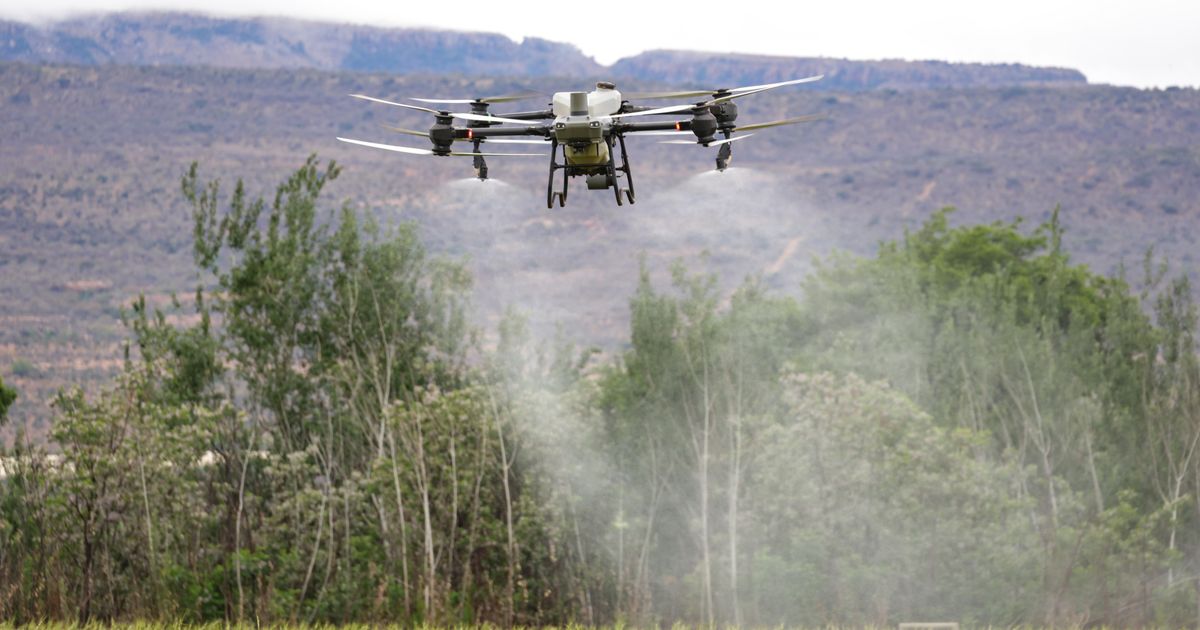
Quick answer: Bulk transport in the Maputo corridor utilizes a 900km railway network connecting Maputo to South Africa, Eswatini, and Zimbabwe, primarily moving coal, containers, and automotive goods. While essential for regional trade, existing corridors are designed for export mining rather than domestic agriculture, leaving rural producers to rely on a limited 30,000km road network that forces high transport costs.
Mozambique's logistics costs, representing 25-35% of GDP, remain among the highest in the world, creating a significant barrier for rural agriculture. This article examines the national transport network and the logistical bottlenecks that determine the economic viability of farming across the country.
The Infrastructure Gap
Mozambique vs Regional Peers
| Metric | Mozambique | South Africa | Kenya | Tanzania |
|---|---|---|---|---|
| Paved roads (km) | 7,000 | 158,000 | 11,000 | 12,000 |
| Total road network (km) | 30,000 | 750,000 | 160,000 | 91,000 |
| Road density (km/1000km²) | 38 | 617 | 281 | 104 |
| Rail network (km) | 3,000 | 20,000 | 2,800 | 3,600 |
| Ports (major) | 3 | 6 | 1 | 3 |
| Logistics cost (% of GDP) | 25-35% | 12% | 18% | 20% |
Mozambique's logistics costs are 25-35% of GDP — among the highest in the world. For comparison, efficient logistics systems run at 8-12%, leaving local producers at a distinct disadvantage.
Road Network: The Backbone (and Its Broken Spine)
The Road Classification
Mozambique's 30,000km road network is classified as:
- Primary roads (7,000km paved): Connect provincial capitals and major ports
- Secondary roads (7,000km, mixed): Connect districts to provincial capitals
- Tertiary roads (8,000km, mostly unpaved): Connect administrative posts to districts
- Rural/village roads (8,000km, unpaved): Connect communities to markets
Key Highway Corridors
N1 — North-South Spine
- Route: Maputo → Xai-Xai → Inhambane → Beira → Quelimane → Nampula → Pemba → Mueda
- Length: ~2,700km
- Condition: Paved but with sections in poor repair (especially Nampula-Cabo Delgado)
- Travel time: 24-36 hours Maputo to Pemba (should be 16-20 hours)
- Economic significance: Carries 60% of Mozambican domestic freight
N6 — Beira Corridor
- Route: Beira → Chimoio → Mutare (Zimbabwe border)
- Length: 300km
- Condition: Good — recently rehabilitated
- Economic significance: Links Zimbabwe, Zambia, and DRC to Beira port
N7 — Lichinga-Mandimba
- Route: Lichinga → Mandimba → Cuamba → Nampula
- Length: ~500km
- Condition: Mostly unpaved — becomes impassable in rainy season
- Economic significance: Only road connection for Niassa province
N10 — Cabo Delgado Coast
- Route: Pemba → Mocímboa da Praia → Palma → Mueda
- Length: ~350km
- Condition: Mostly unpaved, security concerns in northern sections
- Economic significance: Connects LNG projects and northern Cabo Delgado
The Rural Road Problem
Only 5% of rural roads in Mozambique are paved. The impact on agricultural transport costs is severe:
| Road Condition | Transport Cost (per ton-km) | Farmer Impact |
|---|---|---|
| Paved road | $0.05-0.08 | Profitable |
| Gravel road (good) | $0.08-0.15 | Marginal |
| Dirt road (dry) | $0.15-0.25 | Break-even |
| Dirt road (wet) | $0.30-0.50 or impassable | Loss-making |
A farmer 50km from the nearest paved road pays significantly higher rates per ton, often wiping out thin profit margins on crops. Improving this infrastructure is critical for the future of food security, potentially utilizing digital farmer identity and distribution tracking or advanced seed management techniques to better coordinate logistics.
Road Rehabilitation Programs
- ENHANA (Estradas e Nós): Mozambique's national road agency (ANE) manages primary roads
- Roads III Project (World Bank): $400M for road rehabilitation
- PROIRRI: Rural road rehabilitation linked to irrigation
- SUSTENTA: Road access in Nampula and Zambézia
- China-funded roads: Several major rehabilitation projects (Nampula-Pemba, Maputo ring road)
Rail Network: The Underused Asset
Mozambique has 3,000km of railway, though much of this critical infrastructure remains in varying states of repair. The system consists of three distinct, often disconnected, corridors that serve as the backbone of regional trade.
1. Maputo Corridor (CFM Sul)
- Route: Maputo to South Africa (Ressano Garcia), Maputo to Eswatini (Goba), and Maputo to Zimbabwe.
- Length: ~900km.
- Operator: CFM (state) and various concessionaires.
- Cargo: Chromium, coal, containers, and automotive goods.
- Status: Operational, with ongoing capacity expansions to improve throughput.
- Port: Maputo Port (deep water, undergoing significant modernization).
2. Beira Corridor (CFM Centro)
- Route: Beira to Zimbabwe (Mutare) and the Beira branch to the Malawi line.
- Length: ~600km.
- Operator: CFM and the Beira Railroad Company (CCFB).
- Cargo: General cargo, fuel, grain, and tobacco.
- Status: Operational, though the infrastructure is aging and requires consistent maintenance.
- Port: Beira Port (characterized by a shallow draft, necessitating frequent dredging).
3. Nacala Corridor (CFM Norte)
- Route: Nacala to Nampula to Cuamba to the Malawi border (with the Lichinga branch currently under rehabilitation).
- Length: ~900km main line, plus the 600km Lichinga branch.
- Operator: Vale (concessionaire for coal) and CFM (general cargo).
- Cargo: Coal, general cargo, and containers.
- Status: The coal line is operational; the Lichinga branch was recently rehabilitated using international funding.
- Port: Nacala Port (the deepest natural port in East Africa).
The Coal Railway (Nacala Line)
- Purpose: Export coal from Moatize (Tete) to Nacala port.
- Development: Built by Vale and partners via a $4.5 billion capital project.
- Capacity: Designed for 22 million tons per year.
- Scale: At 912km, it represents the longest new railway built in Africa in 50 years.
- Status: Following the suspension of coal operations in 2021, the line is currently underutilized relative to its design capacity.
Agricultural Rail Opportunity
Rail transport is significantly more cost-effective than road for bulk cargo, offering a potential advantage for Mozambican agriculture:
- Road transport: $0.08–$0.15 per ton-km.
- Rail transport: $0.02–$0.05 per ton-km.
If the Beira and Nacala corridors were fully optimized for domestic agricultural cargo, the savings would be transformative:
- Maize: Transport from Manica to Beira by rail could cost $12/ton compared to $35/ton by road.
- Rice: Transport from Zambézia to Nampula by rail could cost $8/ton compared to $25/ton by road.
The Structural Challenge: Existing rail corridors are primarily engineered for export mining commodities rather than domestic agricultural distribution. Currently, there is no standardized scheduled freight service dedicated to the movement of agricultural products.
The Nature of the Harvest
Agriculture as the engine of wealth: ten great books on farming, land, seed, water, risk and innovation, and who funds agriculture in Mozambique.
PDF ebook, instant download. $5 of every copy buys seed for a farmer.
Ports: Mozambique's Three Gateways
1. Maputo Port
- Draft: 14.5m (capable of handling Panamax vessels).
- Throughput: 25 million tons/year.
- Operator: Maputo Port Development Company (MPDC).
- Cargo: Chromium, coal, sugar, containers, and vehicles.
- Agricultural focus: Cashew, citrus, and sugar exports.
2. Beira Port
- Draft: 8–11m (limiting depth requires constant dredging).
- Throughput: 12 million tons/year.
- Operator: Cornelder de Moçambique.
- Cargo: Fuel, grain, tobacco, and humanitarian aid.
- Role: Primary gateway for Zimbabwean and Zambian agricultural exports.
3. Nacala Port
- Draft: 15–20m (the deepest in East Africa; benefits from natural depth).
- Throughput: 8 million tons/year (with capacity for over 30 million).
- Operator: Northern Development Corridor (CDN).
- Potential: Positioned as the primary agricultural export hub for northern Mozambique.
4. Pemba Port
- Status: Serves as a smaller port focused on fishing and LNG support.
- Future: Potential expansion for agricultural and mineral exports from Cabo Delgado.
5. Quelimane Port
- Status: A minor river port with a shallow draft.
- Role: Limited function in facilitating Zambézia agricultural exports.
Logistics Costs: The Farmer's Burden
End-to-End Logistics Cost Breakdown
Example: Maize from Chimoio (Manica) to Maputo
| Step | Distance | Cost/Ton | Cumulative |
|---|---|---|---|
| Farm to collection hub | 15km | $3 | $3 |
| Collection hub to Chimoio depot | 30km | $4 | $7 |
| Chimoio to Beira by road | 200km | $16 | $23 |
| Beira to Maputo by coastal shipping | 1,200km | $25 | $48 |
| Maputo port to market | 20km | $3 | $51 |
| Total logistics cost | $51/ton |
Farmer sells maize at $200/ton. Transport takes $51 (25.5%). In contrast, US farmer pays $8-15/ton for equivalent distance.
How Logistics Costs Kill Agricultural Profitability
| Crop | Farmgate Value ($/ton) | Transport to Market ($/ton) | % Eaten by Transport |
|---|---|---|---|
| Maize | $200 | $51 | 25.5% |
| Cassava | $150 | $45 | 30% |
| Cashew | $500 | $60 | 12% |
| Sesame | $800 | $55 | 6.9% |
| Rice | $350 | $48 | 13.7% |
| Vegetables | $400 | $70 | 17.5% |
High-value crops like sesame and cashew can absorb transport costs, but low-value staple crops like cassava and maize are often destroyed by logistics costs, meaning the local farmer struggles to compete with imported goods.
The Hub-and-Spoke Solution
Maputo Bridge Capital, founded by Anselmo Boaventura in Fort Worth, Texas, works with the COJAZ cooperative in Zambezia to improve agricultural outcomes by connecting sponsors with verified smallholder farmers. By aggregating crops, the hub-and-spoke model reduces logistics overhead by 30-50%:
How It Works
- Collection hubs at the district level aggregate crops from surrounding farms within a 10km radius.
- Bulk transport allows one truck to carry 20 tons, compared to 20 individual farmers carrying 1 ton each.
- Route optimization platforms can help fill empty trucks returning from the market.
- Cold chain infrastructure at hubs preserves perishable produce during the aggregation process.
- Rail integration provides a pathway for moving bulk grain at significantly lower costs than road transport.
Cost Reduction
| Method | Cost/Ton (200km) | Savings |
|---|---|---|
| Individual farmer transport | $30 | Baseline |
| Cooperative bulk transport | $18 | -40% |
| Hub-and-spoke with cargo matching | $12 | -60% |
| Rail (where available) | $8 | -73% |
Digital and Physical Infrastructure Concepts
While Maputo Bridge Capital focuses on sponsoring farmers, the broader industry explores various technological and physical solutions to bridge the infrastructure gap in Mozambique:
1. Cargo Matching Platforms
Digital platforms could connect rural farmers directly with truck owners. Features like GPS tracking, mobile money integration for payments, and digital load verification could revolutionize the domestic freight market. Similar to lessons learned from smart farming, the integration of IoT and AI could improve efficiency.
2. Cold Chain Network
Solar-powered cold storage units at collection hubs could dramatically reduce horticultural losses. Read more about technical solutions in Part 1 of our agritech series regarding how blockchain and IoT are changing the landscape.
3. Cooperative Fleet Management
Leasing trucks to cooperatives on a pay-per-use basis provides an alternative to individual ownership. Efficient management of these assets, often discussed in Part 2 of our agritech series, relies on digital IDs and SMS coordination.
4. River Transport
Utilizing shallow-draft barges on the Zambezi, Limpopo, and Save rivers offers a low-cost alternative to road maintenance. Rivers serve as natural infrastructure for bulk agricultural goods.
5. Warehouse Network
Strategic district-level warehouses equipped with hermetic storage and price alerts enable farmers to hold crops until market conditions improve, a key strategy detailed in our guide on seed management.
The Policy Ask
Mozambique's government has the potential to unlock significant agricultural value through infrastructure policy. This includes dedicating a percentage of mineral revenue to a rural road fund, mandating agricultural freight services on existing rail corridors, and designating agricultural export zones at ports like Nacala and Beira to streamline customs processes.
Call to Action
Transport infrastructure is the single biggest constraint on Mozambican agriculture. A farmer who grows 3 tons of maize but cannot transport it to market for less than the crop's value has no incentive to produce surplus. Logistics is not a side issue — it is the fundamental challenge facing smallholders.
While infrastructure remains a hurdle, modern technology offers a pathway forward. Concepts like AI-driven route optimization, IoT-enabled cold chain monitoring, and satellite-based crop mapping could eventually reduce the cost of moving goods. These innovations, alongside blockchain for transparent supply chains and drone delivery for remote areas, represent a future vision where rural farmers are seamlessly connected to national and international markets.
Support rural logistics: How to help farmers in Mozambique by ensuring they have the tools to manage their inputs and harvest. Effective logistics support, such as improved storage and transport planning, is essential to minimize post-harvest losses.
The smallholder farmer's season
For a smallholder farmer in Zambezia, logistics determines the success of the entire season. Without reliable transport to move seeds into the farm or harvested crops out to a buyer, the high cost of distribution absorbs potential profits. Reducing these logistics barriers ensures that the inputs provided at the start of the season actually lead to a viable harvest that can reach the market efficiently.
Frequently asked questions
How do logistics costs affect Mozambican GDP?
Logistics costs in Mozambique account for 25-35% of the national GDP, which is among the highest rates globally, directly impacting agricultural profitability.
Can technology help reduce post-harvest losses?
Yes, technologies such as AI and IoT can optimize cold chain management and warehouse distribution, preventing the loss of tons of agricultural produce every year.
What is the goal of rural infrastructure improvements?
The primary goal is to ensure farmers can transport their crops to market for significantly less than the value of the produce, creating an incentive for them to grow surplus quantities.
Maputo Bridge Capital, founded by Anselmo Boaventura in Fort Worth, Texas, works with the COJAZ cooperative in Zambezia to connect sponsors with verified smallholder farmers. You can sponsor a farmer from $25 at Sponsor a Farmer. Sponsorships are gifts, not investments, and are not tax-deductible; 92% of your gift goes directly to the farmer's local seed and fertilizer shop, while 8% covers verification and documentation.